 AR

kitchen-knives-and-accessories--cutting-boards_2, kitchen-knives-and-accessories--cutting-boards_2, /kitchen-knives-and-accessories--cutting-boards
EN
Welcome to our store!Black Friday Sale!
kitchen-knives-and-accessories--cutting-boards_2, kitchen-knives-and-accessories--cutting-boards_2, /kitchen-knives-and-accessories--cutting-boards
When I first started evaluating wooden kitchenware for retail supply, I treated all cutting boards as interchangeable utility items — same general category, different sizes. Over time, the differences in wood species, grain orientation, finish composition, and certification scope started to determine commercial outcomes more than any aesthetic variable. This guide covers what those differences mean for buyers sourcing Kitchen Knives and Accessories & Cutting Boards at wholesale volumes for supermarket ranges, gift retail programs, or hospitality procurement.
This product category spans two interconnected segments of professional kitchen supply: knife and accessory programs — chef knives, boning knives, sharpening steel, knife holders, and storage blocks — and cutting boards in multiple material formats including hardwood end grain, hardwood face grain, acacia, teak, walnut, beech, and bamboo constructions. Both segments serve the same operational environment, whether in a hotel kitchen, a restaurant prep station, a supermarket housewares aisle, or a premium gift retail assortment. Buyers who source both as a coordinated category typically achieve stronger shelf coherence and more efficient supplier qualification than those who treat them as separate procurement exercises.
Products in this Kitchen Knives and Accessories & Cutting Boards range are manufactured to wholesale and private label specifications, with the following characteristics defining the current product set:
Wood species selection is a meaningful commercial decision in this category, not just a production variable. Teak commands premium recognition across European and North American hospitality channels — its density, natural oil content, and grain consistency make it a well-understood choice for professional kitchen environments where long-term durability and visual consistency are purchasing drivers. Acacia is a faster-growing hardwood that offers visually distinctive mosaic and checkered grain patterns, competitive pricing relative to walnut or teak, and strong sustainability positioning when FSC documentation is in place.
The label "food safe" on cutting boards and kitchen accessories does not translate consistently across markets — finish composition requirements mean the same claim may carry different testing obligations in the EU versus the US. FSC certification addresses forestry sourcing; FDA compliance covers US food contact surface requirements; LFGB addresses EU food contact material standards. A product set carrying all three certifications gives buyers documented compliance across multiple markets without requiring reformulation or additional supplier qualification. For buyers managing EU and North American distribution in parallel, that documentation distinction is not a premium feature — it is a compliance floor.
Between a decorative mosaic acacia finish and a plain face grain construction, the mosaic option is more eye-catching on shelf and in gift assortment contexts. If resistance to batch-to-batch color variation and consistent planogram repeatability is the commercial priority, however, face grain boards in teak or beech carry lower natural variation risk. There is no universally correct answer here — what works for a premium gift retailer building a seasonal assortment differs from what a supermarket category manager needs for a 12-month replenishment program.
Products across this Kitchen Knives and Accessories & Cutting Boards range are sourced for the following commercial contexts:
For a retail buyer, wood species and board thickness matter less in isolation than how each product configuration fits the category architecture being built and the end consumer expectations at your retail tier. The practical questions are operational: What end-use scenario does the buyer face? What certification documentation does your target market require? Is this a commodity replenishment item or a gifting anchor product with a premium positioning requirement?
If the priority is EU market compliance with documented food contact certification and forestry traceability, FSC and LFGB-certified teak or acacia formats with documented mineral oil and beeswax finishing are the appropriate specification. If the priority is visual range differentiation for gift retail, mosaic acacia sets and book-form configurations offer strong shelf presence with OEM engraving to support private label brand identity. If the priority is consistent reorder performance for a supermarket planogram, standard face grain boards in beech or acacia with documented production consistency are the more defensible commercial choice for ongoing category management.
If your requirement is batch-to-batch color uniformity across a large display range, bear in mind that natural acacia grain variation is part of the product's visual character — it works well in individual piece presentations but introduces range-level variation that requires grading at production. Teak and beech handle uniformity requirements differently, and that distinction is worth raising at the sampling stage rather than discovering at the first full-container receipt.
When evaluating Kitchen Knives and Accessories & Cutting Boards at wholesale volume, the commercial question extends beyond individual product quality to supply chain reliability, certification coverage, and OEM capability. A supplier who can provide a consistent range across multiple wood species, maintain FSC, FDA, and LFGB documentation for multi-market distribution, and support private label programs with factory-direct engraving reduces the number of supplier relationships a buyer needs to manage in this category.
Supermarket buyers managing category margin under shelf price pressure should note that certified hardwood boards with documented finish composition carry stronger retailer qualification support than uncertified alternatives. A compliance gap identified at the buyer's import stage — rather than the factory stage — becomes a category liability that the buyer absorbs, not the supplier. Sourcing with multi-market certification documentation in place at the point of order reduces that risk materially and shortens qualification cycles with compliance-oriented retail buyers.
The range depth available — from individual face grain boards in entry price tiers to end grain butcher blocks and curated gift sets at premium positioning — allows a single sourcing relationship in this Kitchen Knives and Accessories & Cutting Boards category to serve multiple buyer segments and price architecture tiers without requiring additional supplier development cycles.
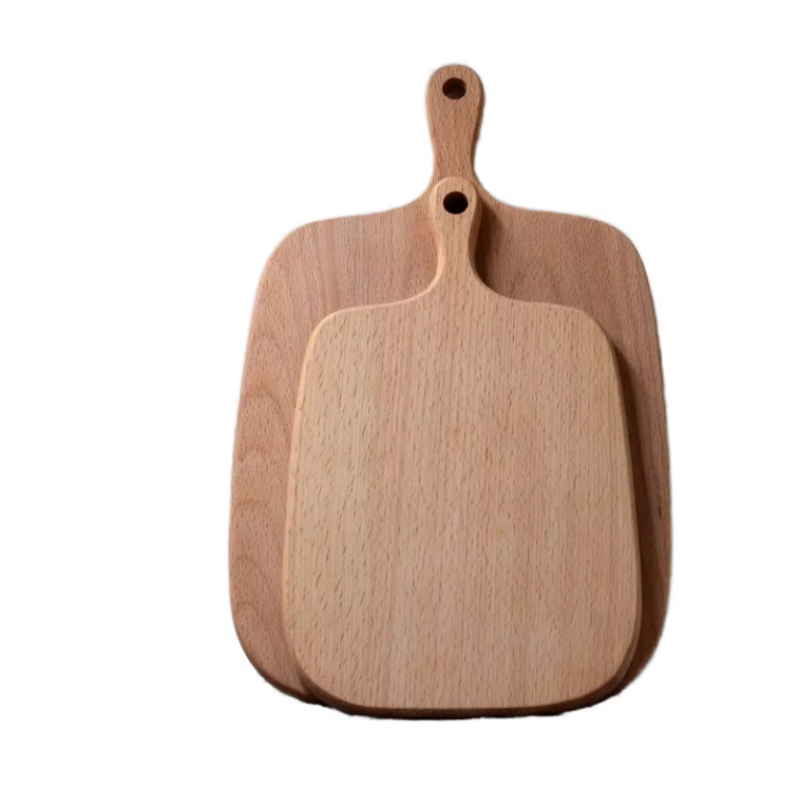
A cutting board is a daily-use item in any commercial kitchen — but when it also appears on charcuterie displays, hotel dining setups, or branded restaurant service boards, material quality matters beyond food safety alone. CAO XIAN KANG YI's wooden cutting board wholesale program answers both demands. Solid acacia, beech, and walnut boards in paddle, rectangular, round, and oval formats carry FSC, FDA, and LFGB certification. Each eco-friendly kitchen board is available with precision laser engraving, three thickness options, and direct factory pricing for restaurant chains, hospitality distributors, and private label buyers worldwide.