AR

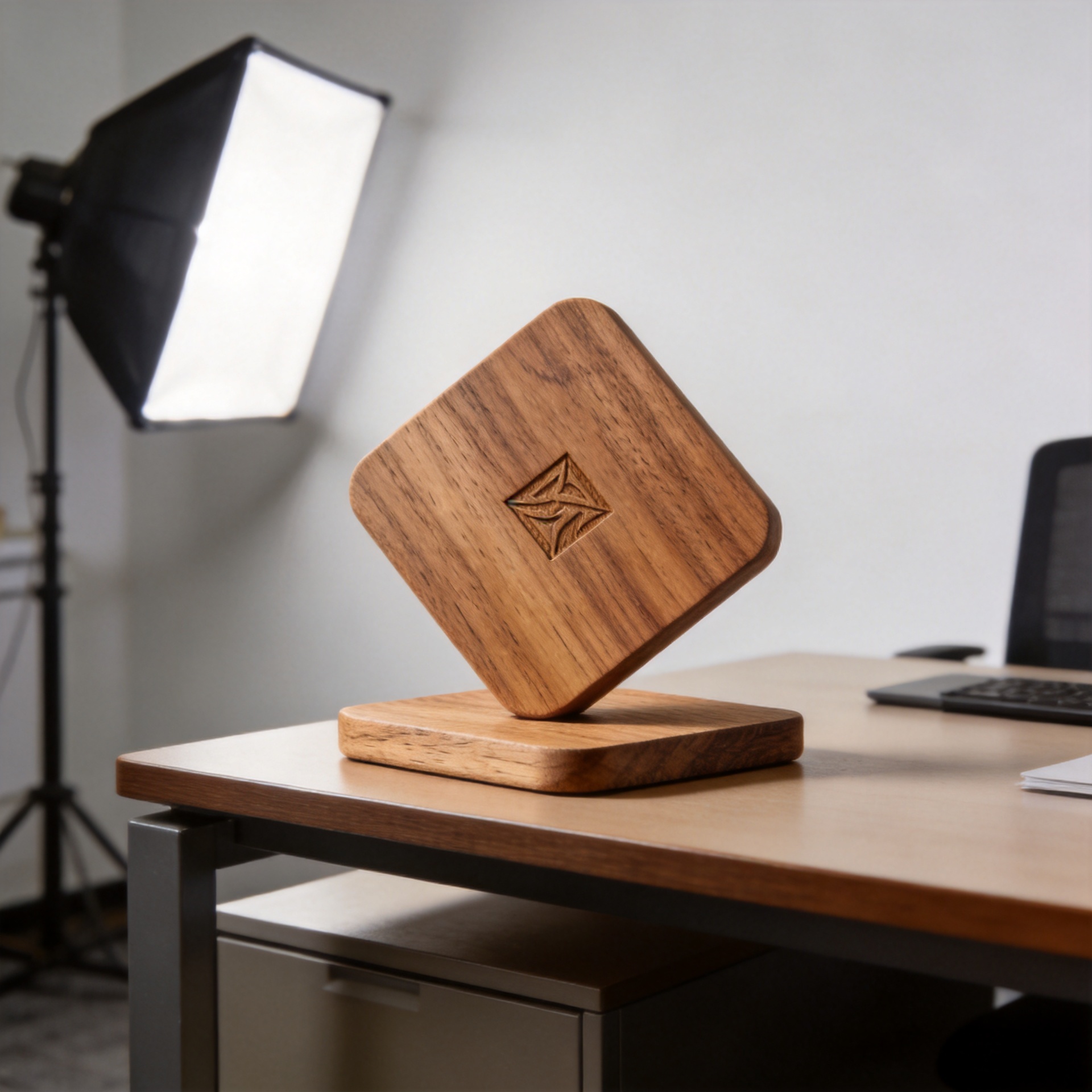
Custom Wooden Coasters for Corporate Gifts and Branding.
Corporate gifting has more impact when an item earns a place in everyday life. Wooden coasters do that quietly: they protect a desk or table, keep a logo visible without demanding attention, and give a campaign a tactile material story. For a supermarket buyer, distributor, or trading company, however, ordering custom wooden coasters is not just a matter of choosing a shape and uploading a logo. The useful questions concern artwork, finish, packaging, sampling, and whether the next production run will look like the first.
This guide approaches wooden coasters as a branded product program rather than a novelty giveaway. It is designed for teams sourcing corporate gifts, retail-ready promotional gifts, employee welcome kits, hospitality merchandise, or client thank-you sets.
Start with the job the coaster must do
Before choosing materials or decoration, define the role of the wooden coasters. A four-piece set for a year-end client gift has different priorities from a single branded coaster used at a café counter, a trade-show desk drop, or a supermarket seasonal display. The first needs an unboxing experience; the second may need repeatable logo visibility and easy replenishment.
Ask the commercial team to agree on five basics:
- Audience: clients, employees, retail shoppers, event visitors, or hospitality guests.
- Use setting: office desk, home table, café, bar, meeting room, or gift box.
- Brand role: a primary logo, a campaign mark, a line illustration, or a discreet monogram.
- Order model: one campaign run or a replenishable branded SKU.
- Packaging expectation: transit protection only, retail presentation, or a fully gift-ready set.
There is no single universal format for wooden coasters. A buyer focused on broad promotional distribution may value a simple, durable design. A buyer creating premium promotional gifts may reasonably spend more time on a coordinated set, packaging, and a more restrained mark.
Choose a format that supports the brand, not just the logo
For wooden coasters, the material, profile, edge treatment, and surface decoration work together. Natural grain can make each piece feel less generic, but it also means tone and pattern may vary. That variation can be attractive in a gift program, while a tightly controlled retail display may need a clearer pre-production reference for acceptable range.
Engraving is often a practical choice when the desired effect is permanent-looking and tactile. It can suit wordmarks, initials, short messages, simple icons, and line-based artwork. Printed decoration may be more appropriate when a campaign depends on multiple colors or fine color matching. The right decision depends on the artwork and the intended finish, not on a claim that one method is automatically superior.
When reviewing engraved coasters, request an artwork check before sampling. Fine lines, tiny type, dense fills, and low-contrast details can change once they meet a natural wood surface. A logo that looks sharp on a screen may need simplified line weights or more open space to remain legible on the finished coaster. That is a design adjustment, not a compromise in brand standards.
Build an engraving-ready artwork brief
A useful brief prevents avoidable revisions. For custom wooden coasters, include the approved logo file, the intended placement, orientation, logo size, number of sides to decorate, and a note explaining what matters most: maximum legibility, a subtle premium look, or a campaign-specific graphic. If the program includes a holder, box, sleeve, or care card, identify whether the artwork applies to those components too.
It is worth asking a direct question: what will a recipient notice first, and what should they understand after a closer look? A large mark may be ideal for event visibility; a smaller engraving may feel more appropriate for executive gifts. Good promotional gifts make that choice deliberately.
For an OEM coaster project, turn the visual brief into a measurable approval process. Identify the master artwork version, specify the sample approval contact, and state which differences require reapproval. The goal is not to eliminate natural wood character. It is to avoid discovering late in production that the logo is too dark, too light, off-center, or visually crowded.
Use a sample to test the real buying decision
Online images are useful for early comparison, but they do not show everything a buyer needs to judge. With wooden coasters, the sample is where surface smoothness, edge feel, engraving clarity, flatness, and color range become tangible. Examine it under normal office or home lighting, not only in studio photography.
For corporate gifts, test the sample in the way recipients will encounter it. Place a cold drink on it, see how the item sits on a flat surface, open the proposed pack, and assess whether the visual hierarchy still works at arm’s length. A coaster that photographs well but rocks on a tabletop is not ready for a branded program. Likewise, an attractive gift box that permits movement in transit needs a packaging revision before volume production.
From a retail buyer’s perspective, consistency is usually more valuable than a lowest-price comparison. If your program requires repeat orders, agree on an approved sample and clear inspection points for the logo placement, finish appearance, and packaging configuration. This is especially relevant when an OEM coaster order will become a recurring item rather than a one-off campaign.
Plan packaging as part of the brand experience
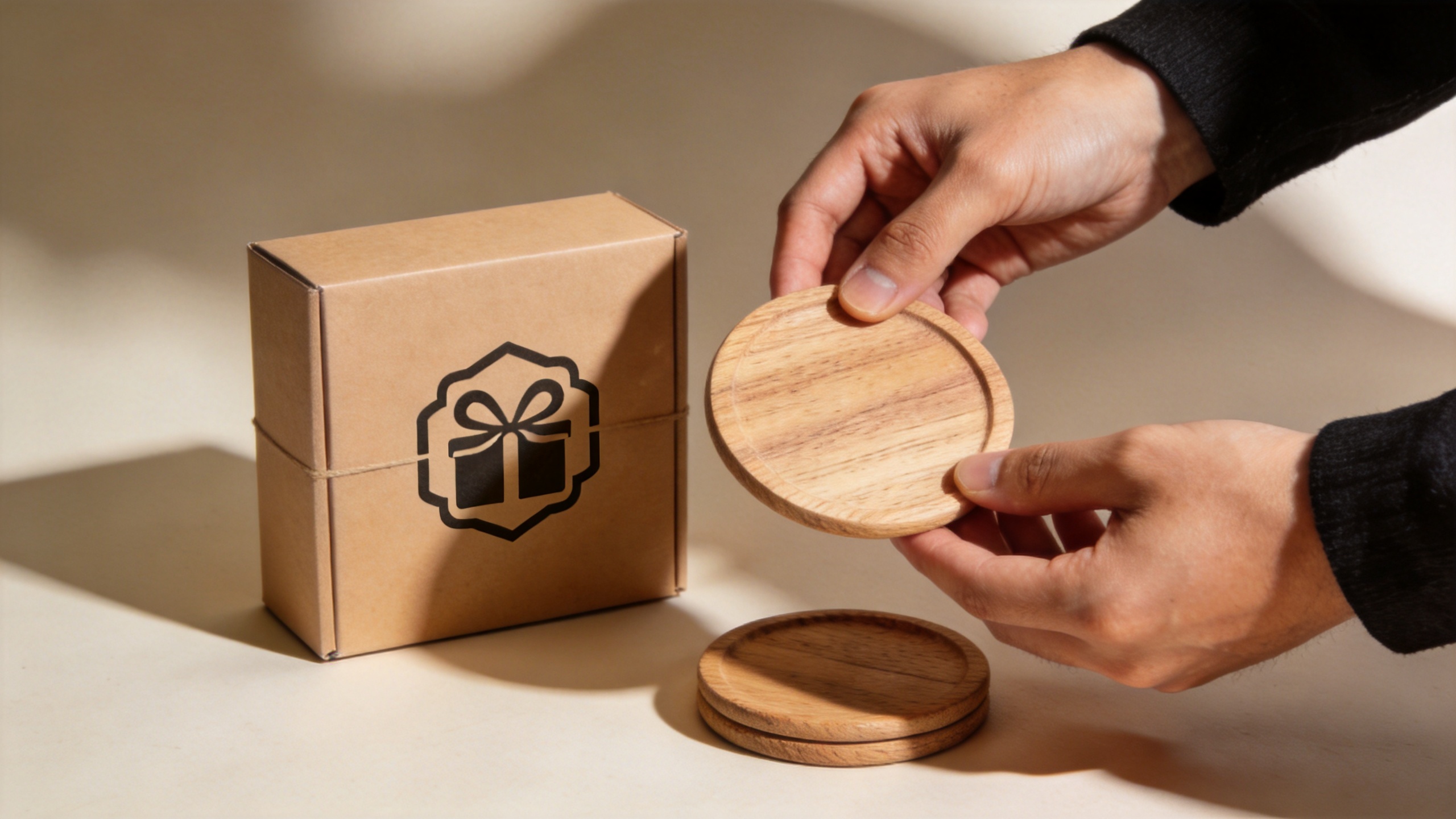
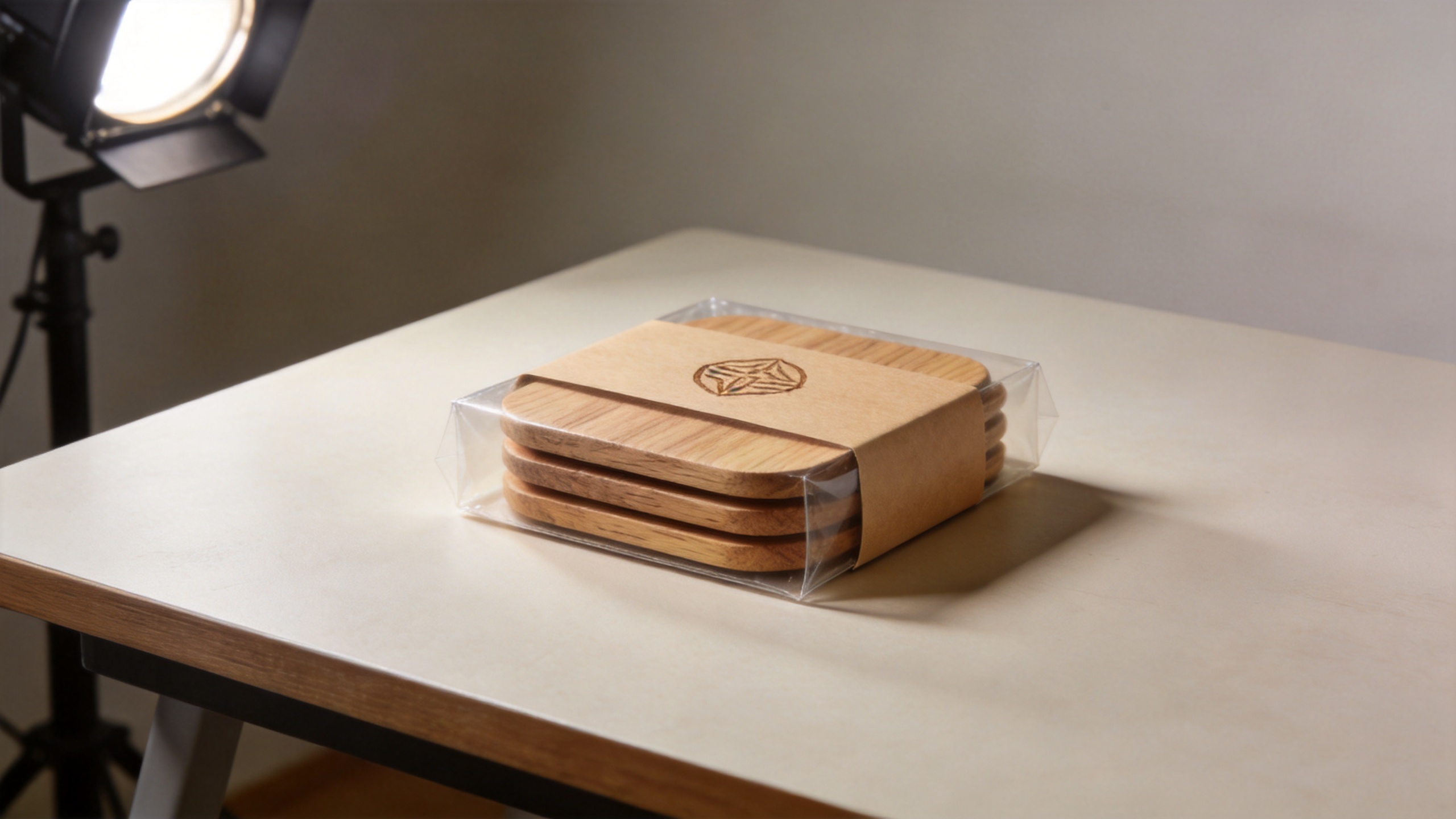
Packaging is not an afterthought for branded wooden coasters. It affects perceived value, warehouse handling, and the condition in which the recipient receives the gift. A bulk promotional distribution may use protective inner packs and simple outer cartons. A client gift may call for a coordinated sleeve, box, insert, or message card. Neither route is universally better; the fit depends on the channel and budget.
Describe the packaging hierarchy in the sourcing brief: individual protection if needed, set configuration, retail or gift presentation, master-carton expectations, and any branded inserts. For a trading company, this also makes downstream handling requirements easier to communicate. If the cost of a gift-ready pack changes the economics, surface that decision early rather than treating it as a late-stage add-on.
Check sourcing readiness before volume approval
Corporate buyers often focus on the visible design first. The more durable procurement decision comes from checking how the supplier will support the program after approval. Caoxian Kangyi Wood Products Co., Ltd. works across wooden kitchenware, wood storage racks, and wooden furniture and serves supermarkets and trading companies in Europe, North America, Oceania, and South America. Those are relevant starting facts for a sourcing conversation, but the exact fit for a particular coaster program still needs to be confirmed through the brief, sample, and order discussion.
Use this practical checklist for custom wooden coasters:
- Confirm the final artwork, decoration method, dimensions, and set quantity.
- Approve a physical sample or an agreed sample process before a volume commitment.
- Document acceptable natural color and grain variation rather than assuming every piece will match perfectly.
- Define inspection priorities: flatness, smooth edges, logo clarity, finish appearance, and pack condition.
- Clarify production timing, shipping marks, packaging requirements, and the information needed for your destination market.
- Keep the approved sample and artwork version available for a repeat OEM coaster order.
For buyers who need custom wood products across a wider home-goods range, a supplier discussion can also cover how the coaster program should visually relate to adjacent kitchenware or storage items. That is a range-planning question, not an assumption that every product must share the same construction or finish.
Turn a small item into a coherent brand touchpoint
The value of wooden coasters in corporate gifting is not that they are loud. Their strength is repeat exposure in a familiar setting: a meeting table, a home office, a reception area, or a gift box opened after an event. The most effective programs keep the design clear, use a sample to settle practical questions, and treat packaging and repeatability as part of the product.
If you are evaluating wooden coasters for promotional gifts, prepare the artwork brief and use it to request a focused sourcing discussion. A well-defined brief makes it easier to compare options fairly, protect brand intent, and decide whether the proposed product is right for your audience and channel.