AR

Why Are Wooden Spatulas Suitable for Nonstick Cookware?
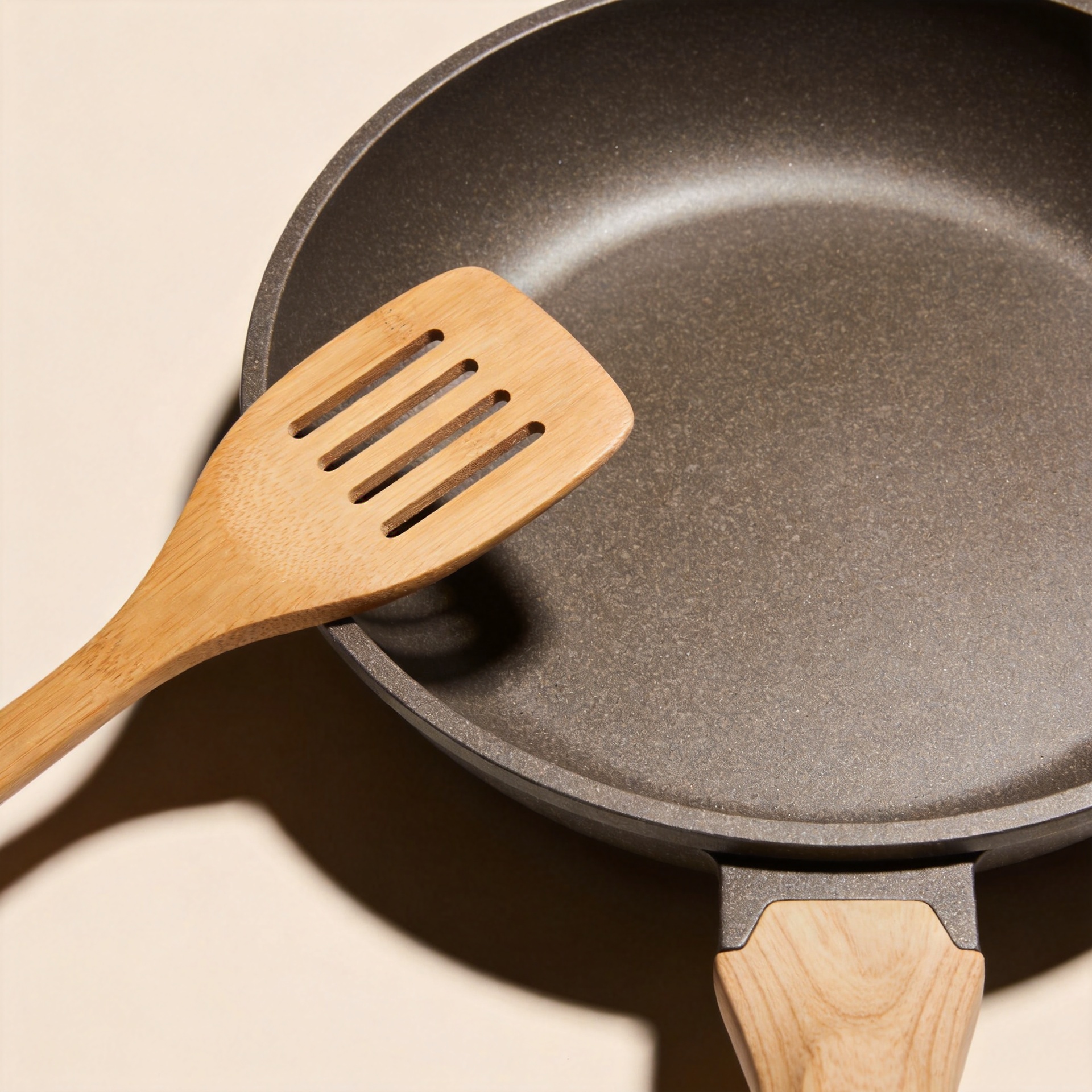
A wooden spatula is a sensible everyday partner for a nonstick pan because it can move food without introducing a hard metal edge to the cooking surface. That is the simple answer. The more useful answer is that suitability depends on the tool’s finish, shape, condition, and the way it is cleaned. A rough, split, or poorly finished utensil is not automatically gentle just because it is wood.
From a cooking perspective, the most useful kitchen tools disappear into the workflow: they slide under an egg, draw a sauce across the pan, and stir a thick mixture without making you worry about the coating. A well-made wooden spatula does that quietly. For retailers, trading companies, and anyone assembling practical nonstick cookware tools, it is also an approachable material category with several useful shapes.
Why a wooden spatula is kind to a nonstick surface
Nonstick coatings benefit from utensils that do not scrape with a sharp or rigid edge. Wood is comparatively forgiving in normal cooking contact, especially when the working edge has been sanded smooth and kept in good condition. This makes a wooden spatula useful for stirring, folding, scraping softened food from a curved pan, and turning foods that do not require an ultra-thin blade.
The key point is contact behavior, not a vague “natural is automatically better” claim. A smooth wooden edge spreads pressure more gently than an exposed metal corner. It also tends to make less abrupt noise against the pan, which is a small but real signal during day-to-day use: the utensil is not striking the surface as aggressively.
That does not make wood a substitute for good pan care. Avoid dragging any utensil with grit on it across the coating, and replace a tool that has developed splinters, cracks, or a rough edge. The first wash often tells you a lot. If the surface feels raised, fuzzy, or uncomfortable in the hand afterward, it needs attention before it goes back into the utensil crock.
Where a wooden turner works especially well
A wooden turner is particularly useful for tasks where gentle movement matters more than razor-thin access. Think of stirring vegetables, turning pancakes with a broad head, moving scrambled eggs, or keeping a risotto from catching in the corners of a skillet. A flat or slightly angled head can reach across the pan, while a rounded edge is less likely to concentrate force in one narrow point.
For delicate fish fillets or very thin crepes, some cooks may prefer a flexible silicone or nylon turner that can slip farther underneath. That is not a flaw in a wooden spatula; it is a reminder to match the tool to the job. A useful set of kitchen utensils includes more than one turner shape.
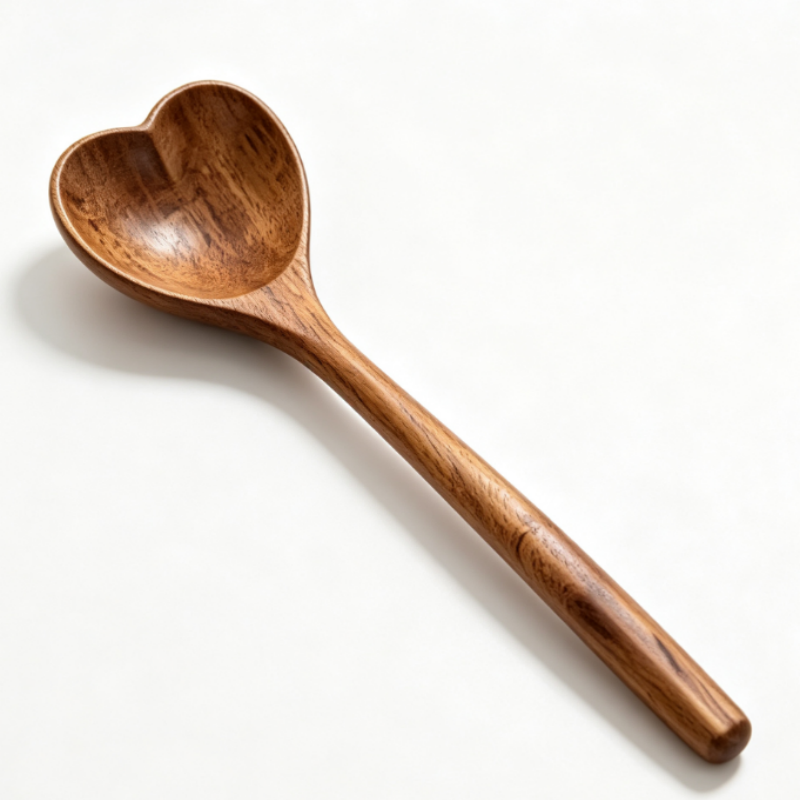 A smooth wooden turner is designed for steady, gentle everyday pan contact.
Wood, silicone, and nylon: choose by task
| Material | Best everyday use | What to check |
|---|---|---|
| Wood | Stirring, folding, sautéing, and broad turning | Look for a smooth finish, comfortable handle, and intact working edge. |
| Silicone | Flexible scraping and delicate foods | Check the head-to-handle joint and whether the shape feels too floppy for heavier food. |
| Nylon | Lightweight, heat-conscious everyday tasks | Follow the maker’s heat guidance and replace a warped or damaged head. |
Rather than treating one material as universally superior, build cookware accessories around actual use. Wood brings a stable, warm feel and a quiet pan contact. Silicone brings flexibility. Nylon can offer a light, practical option. For a nonstick assortment, the strongest choice is usually a balanced mix.
What to inspect before buying or stocking wooden spatulas
1. The edge and sanding quality
Run a finger carefully along the edge. It should feel even, without sharp corners, torn grain, or a ridge where the finish changes. This is the practical detail that separates a wooden spatula suited to nonstick cookware from one that only looks attractive in a product photo.
2. The head shape
A broad, straight head suits stirring and turning larger foods. A tapered or angled profile helps reach the pan’s curve. The right profile should suit the intended recipe, not merely follow a decorative silhouette.
3. The handle in use
Handle comfort matters during a long stir. It should offer enough purchase without feeling oversized, and the transition into the head should feel coherent rather than thin or abrupt. These details influence whether a utensil is used every day or left in a drawer.
4. Material consistency for repeat orders
For procurement teams, appearance is only one part of the decision. Consistent shaping, sanding, and finish across an order make a set easier to merchandise and easier for end users to understand. Caoxian Kangyi Wood Products Co., Ltd. works across wooden kitchenware, wood storage racks, and wooden furniture, a category breadth that reflects wider woodworking capability; specific product details should still be confirmed during sourcing.
Care that keeps a wooden spatula useful
Wash a wooden spatula promptly with mild soap and water, then dry it rather than leaving it submerged. Avoid the dishwasher unless the supplier explicitly states otherwise, since prolonged heat and moisture can stress wood and affect its finish. Do not use a utensil that has split, developed loose fibers, or feels rough along the working edge.
Occasional conditioning may help maintain a smooth feel, but it is not a substitute for inspection. “Oiled” does not mean maintenance-free. In a busy kitchen, a quick check after washing is the habit that matters most.
A practical conclusion
A wooden spatula is suitable for nonstick cookware because a smooth, intact wooden edge offers gentle everyday contact while remaining stable enough for common stirring and turning tasks. Choose a shape that fits the food you cook, keep the surface clean and smooth, and pair it with silicone or nylon tools where added flexibility is useful. That approach gives home cooks and retail buyers a more realistic way to select nonstick cookware tools: judge the finish, the shape, and the ongoing care—not just the material name.