AR

What Wood Is Best for a Wooden Cheese Board?
The most suitable wood for a wooden cheese board depends on what the board must do on the shelf, at the table, and after repeated washing. For a supermarket buyer or a trading company building a coordinated kitchenware range, the question is not simply whether a species looks attractive. A good wooden cheese board needs a sensible balance of food-contact suitability, grain appearance, resistance to everyday moisture, finish compatibility, replenishment consistency, and price position.
As a practical buying rule, choose the material after defining the intended use. A compact board for presenting soft cheese and fruit has different priorities from a large charcuterie board designed for entertaining. The most versatile choices are usually dense, close-grained hardwoods that look polished without making care instructions unnecessarily complicated.
The short answer: which wood should you choose?
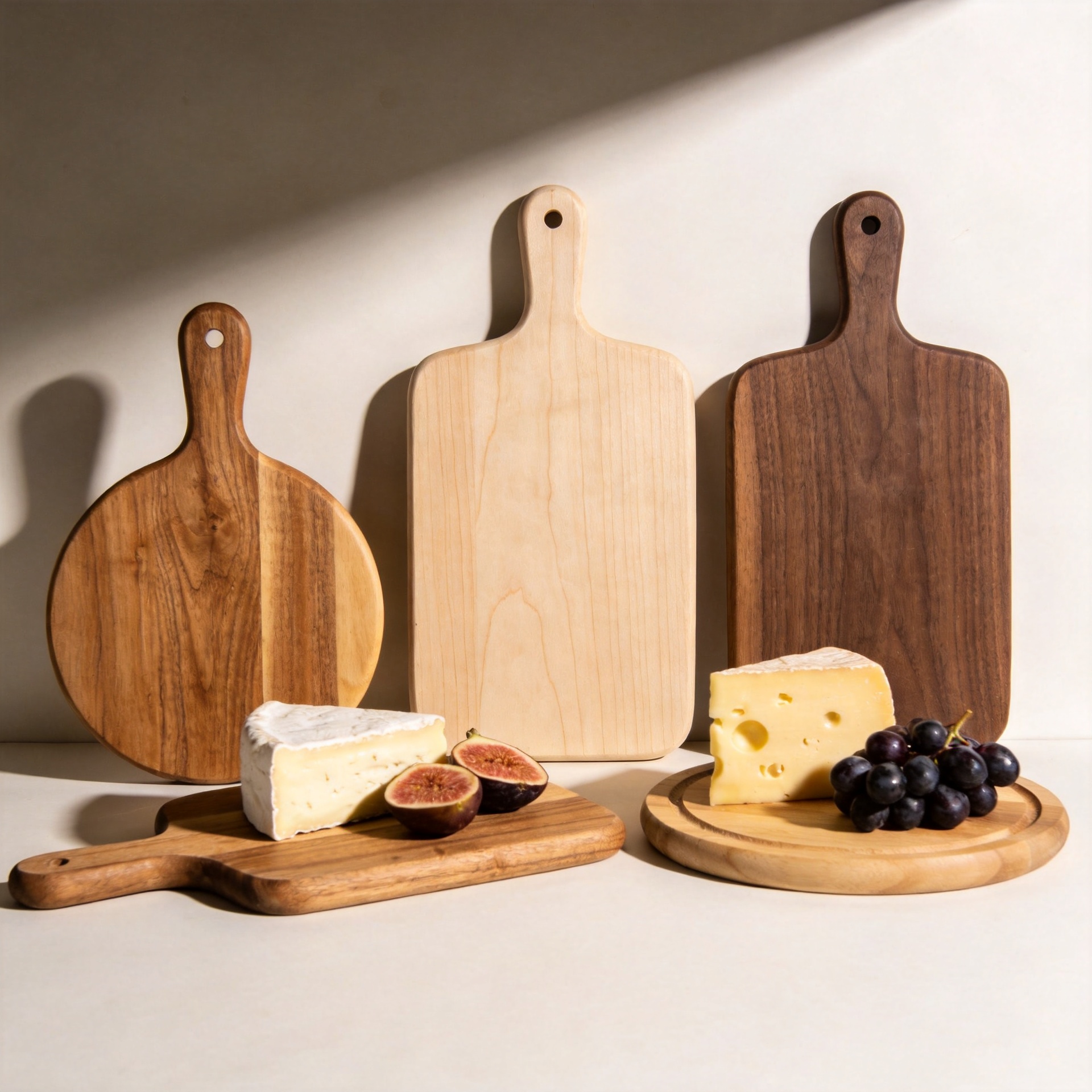
For many retail programs, acacia is a strong all-round option for a wooden cheese board. It offers warm color variation and a characterful grain that helps each piece feel decorative. Maple is a dependable choice when a clean, pale, uniform look matters. Walnut creates a darker, more premium presentation, while teak can appeal where buyers prioritize a naturally oily appearance and moisture-conscious care. No single species suits every program; the right wooden cheese board is the one that fits the collection, price tier, and care expectation.
| Wood option | Best fit | Visual character | Buying consideration |
|---|---|---|---|
| Acacia | Versatile gift and retail ranges | Warm tones and visible grain contrast | Natural variation should be expected and communicated |
| Maple | Clean, contemporary assortments | Pale and relatively even | Finish and storage guidance still matter |
| Walnut | Premium entertaining collections | Deep brown, refined appearance | Usually suited to a higher-value presentation |
| Teak | Moisture-conscious serving ranges | Golden to medium brown | Verify legal sourcing and finish specifications with the supplier |
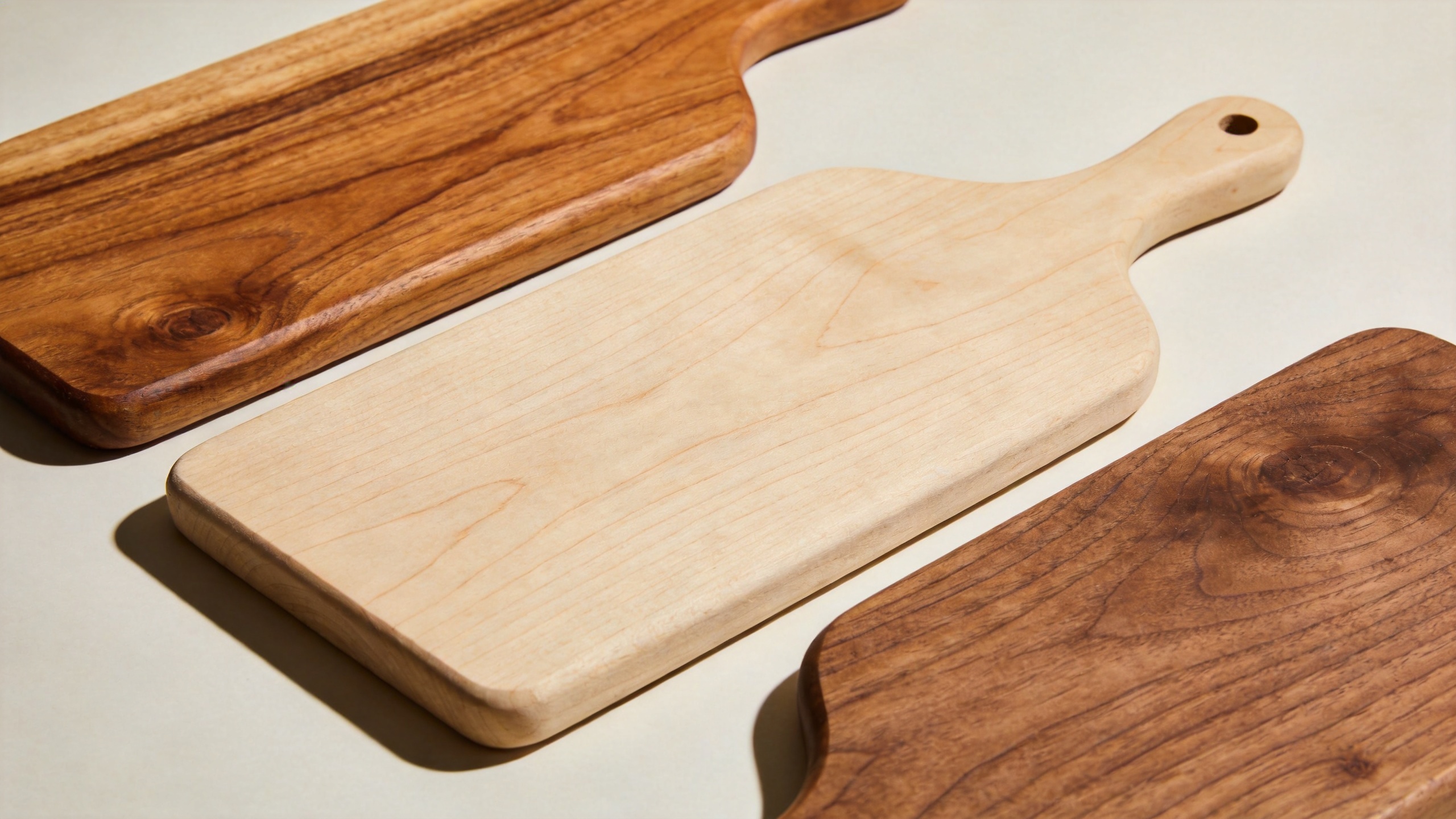
Why acacia is often chosen for an acacia cheese board
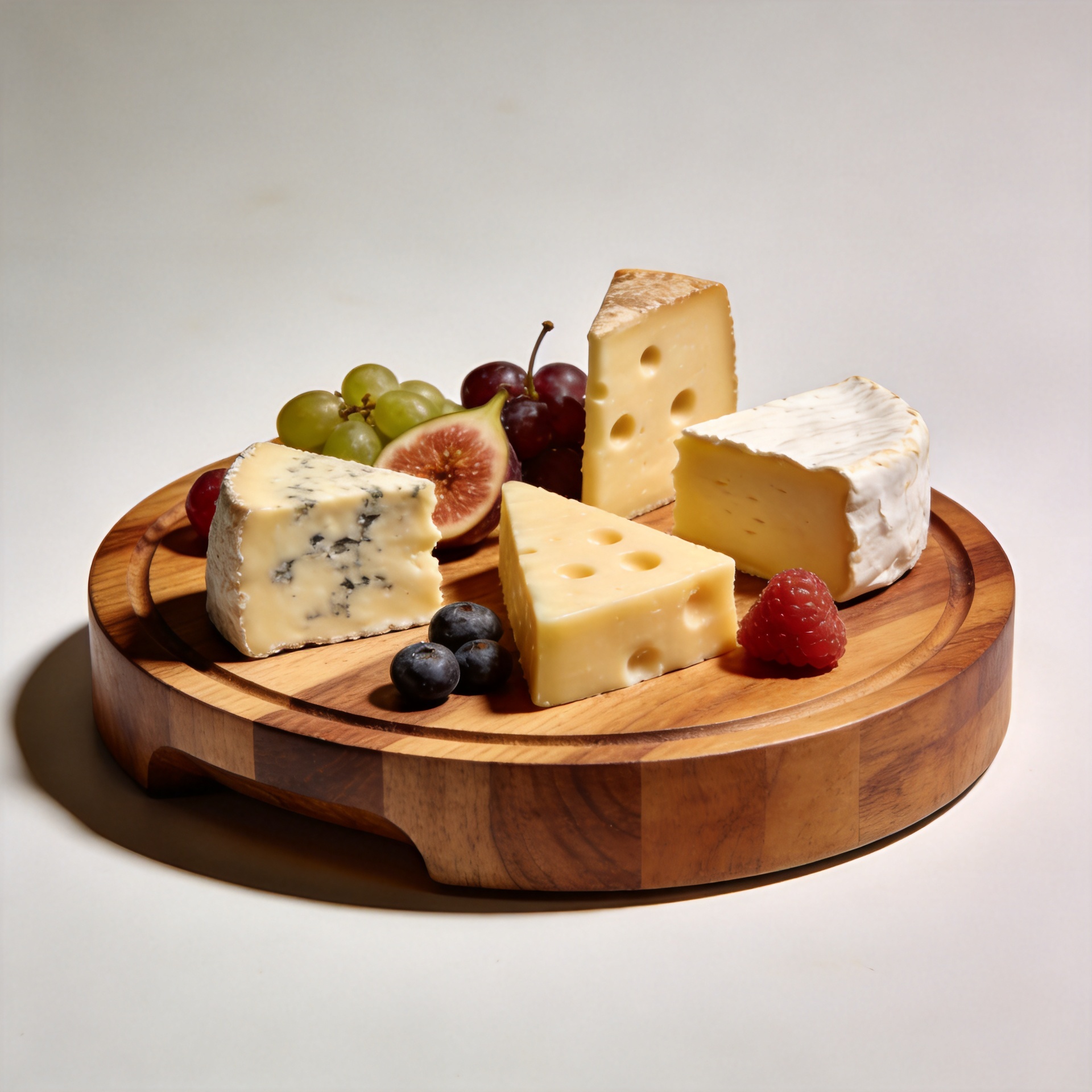
An acacia cheese board works especially well when a range needs visual warmth without relying on a heavily decorated surface. Acacia’s changing tones and grain lines can make a simple round, rectangular, or paddle-shaped board look more considered. That is useful for giftable foodware and for a serving board range that needs to photograph well in a catalog or in-store display.
There is a practical trade-off: variation is part of the material’s appeal, but it also means a buyer should agree on an acceptable appearance range before production. For an acacia cheese board, ask for representative samples that show the likely spread of grain, color, join lines, and edge finishing. A clear product description can then set appropriate expectations rather than presenting every board as identical.
Compare cheese board materials by real use, not by species alone
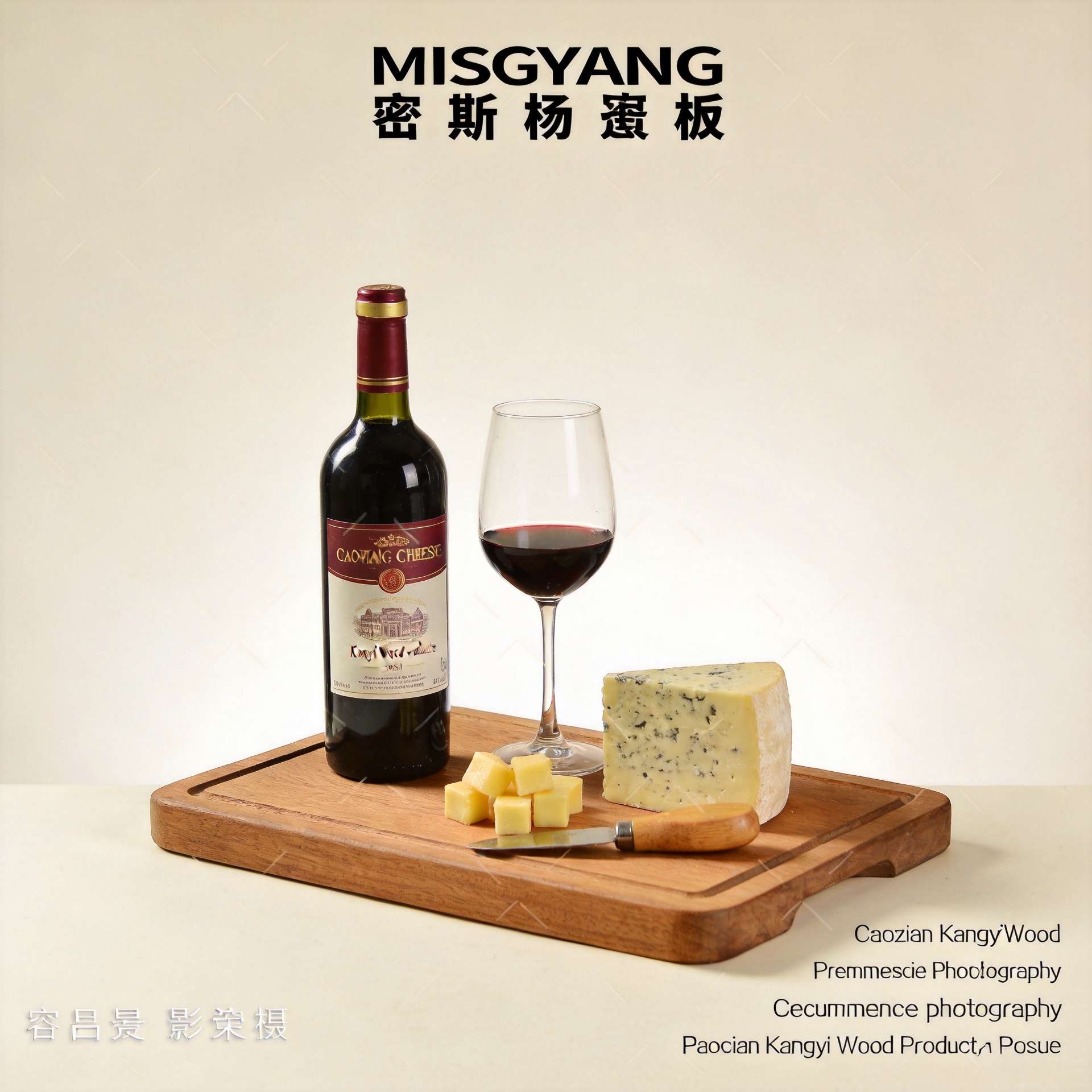
When comparing cheese board materials, start with the menu and the setting. A board used mainly for cut cheese, crackers, and fruit is a presentation surface. A board that will also see frequent knife use needs a more deliberate discussion of thickness, construction, and maintenance. This distinction prevents a wooden cheese board from being positioned as something it was not designed to be.
- Appearance: Match light maple, varied acacia, dark walnut, or warm teak to the broader tabletop collection.
- Construction: Review solid-piece and assembled formats separately. Joinery, sanding, and edge treatment can affect the perceived quality as much as species.
- Care: Give concise advice to hand wash promptly, dry thoroughly, and condition a wood surface as appropriate with a food-safe product.
- Scale: A small wooden cheese board supports individual serving; a larger board should leave room for cheese, accompaniments, and easy carrying.
- Range logic: Coordinate a charcuterie board, cheese knives, bowls, and storage-friendly shapes rather than buying isolated SKUs.
What makes a wooden cheese board suitable for retail?
For commercial buyers, the right wooden cheese board is also an operational choice. Confirm target dimensions, thickness tolerances, packaging approach, logo treatment, and whether the assortment will be sold as a single board or a set. These decisions affect shelf appeal, freight planning, and the clarity of online listings. They also help distinguish a decorative serving board from a more robust entertaining piece.
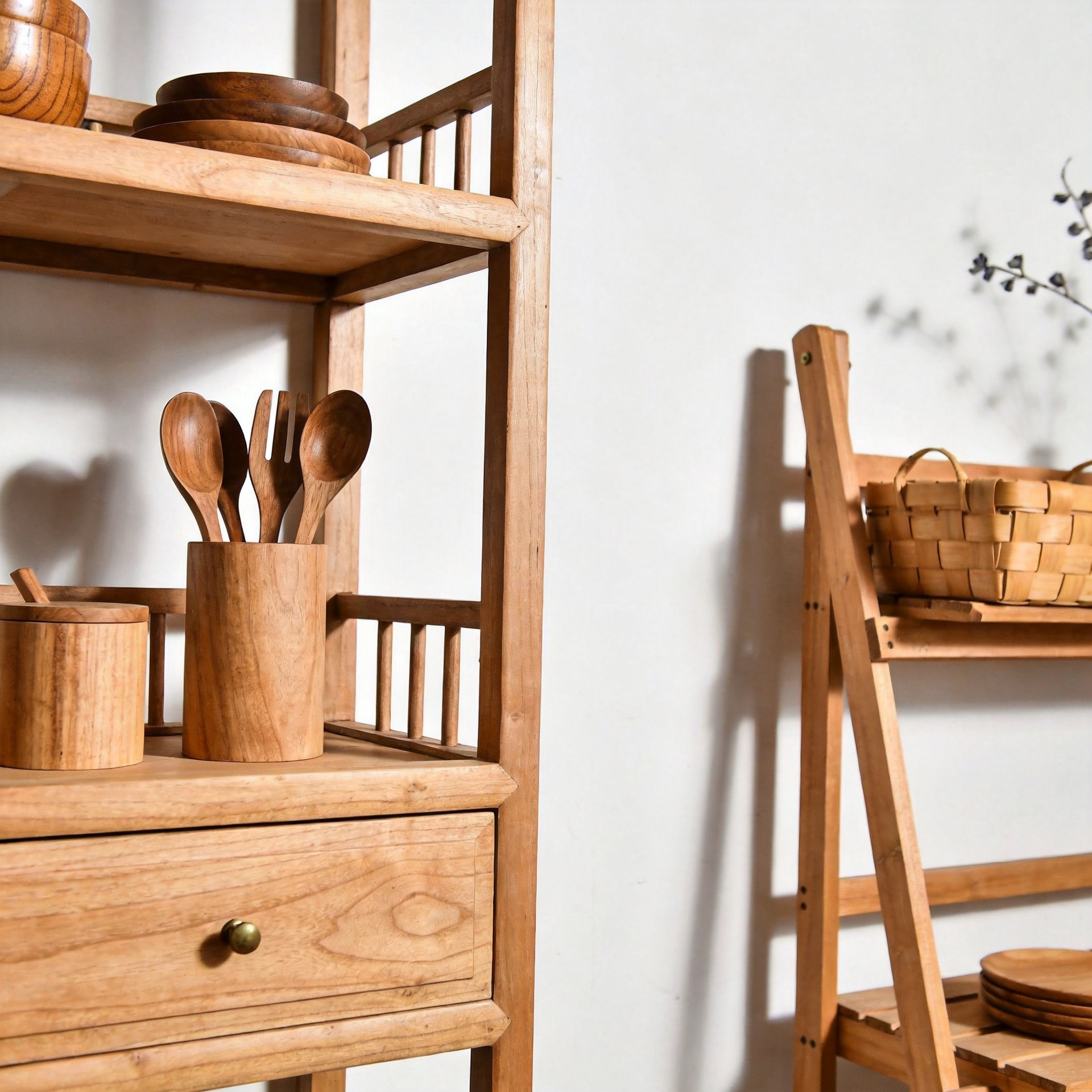
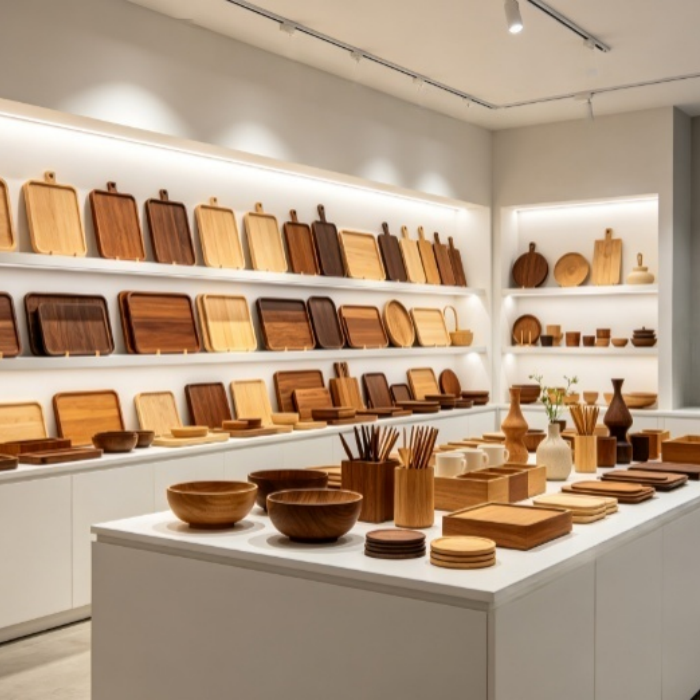
Caoxian Kangyi Wood Products Co., Ltd. works across wooden kitchenware, wood storage racks, and wooden furniture. That category breadth can be useful when a buyer is exploring coordinated wood products rather than treating the cheese board as a stand-alone item. Still, each wooden cheese board specification should be confirmed at product level, including the wood species, dimensions, finish, packaging, and any buyer-specific requirements.
How to specify a charcuterie board without creating avoidable returns
A charcuterie board is often bought for sharing and display, so practical details deserve as much attention as the wood. State whether the board is intended for serving, light preparation, or both. Define the handle or hanging-hole design, surface profile, and expected color variation. If a set includes tools or ceramic elements, make sure the packaging protects each component and shows the set’s use clearly.
It is equally important to provide care language at the point of sale. A wooden cheese board should not be left soaking in water or placed in a dishwasher unless the confirmed product instructions explicitly say otherwise. Simple care guidance helps protect the finish and supports repeat use, particularly for an acacia cheese board with a natural-grain presentation.
A buyer checklist for choosing cheese board materials
- Define the use case: everyday cheese service, gifting, or a large charcuterie board for entertaining.
- Select the visual direction: consistent and light, dark and premium, or naturally varied.
- Request samples that reflect realistic grain and color variation for the chosen cheese board materials.
- Confirm dimensions, construction, surface treatment, packaging, and care copy before order approval.
- Review whether the wooden cheese board will be part of a wider kitchenware story with complementary serving pieces.
Final recommendation
If you need one flexible answer, acacia is often a compelling choice for a wooden cheese board because it combines a warm retail look with broad serving-board appeal. Maple suits cleaner, lighter collections; walnut supports a more elevated visual direction; and teak may suit specific moisture-conscious concepts. The strongest procurement decision comes from comparing samples and confirmed specifications, not from choosing a species name alone. With that approach, a wooden cheese board can become a useful, attractive component of a coherent kitchenware assortment.