AR

How to Choose Wooden Dinner Plates for Restaurants and Hospitality?
For restaurants, hotels, caterers, and food-service buyers, choosing a Wooden dinner plate is less about finding the most photogenic piece and more about defining what must work through repeated service. A plate may look excellent in a sample box yet create problems when it rocks on a table, shows uneven finish under dining-room lighting, or varies noticeably across a reorder. The right Wooden dinner plate specification starts with the menu, service style, cleaning routine, and market documentation requirements—not with a generic “natural” claim.
This guide treats restaurant dinnerware as an operating decision. Use it to compare materials, finishes, dimensions, and supplier controls before a hospitality order moves from sample to production.
Start with the service job, not the visual style
A Wooden dinner plate for a composed entrée has different demands from a sharing board, buffet display, room-service tray, or decorative charger. Ask three questions first: Will food sit directly on the surface? How often will staff handle it in one shift? Must units stack, fit a dishwasher workflow, or match across multiple venues? There is no universal answer. A boutique restaurant may accept natural variation as part of the experience, while a hotel group may prioritize consistent dimensions and a controlled tone across properties.
Map each Wooden dinner plate to a use case before requesting a quotation. Direct-food-contact serving calls for particular care in material and finish verification. A presentation board used beneath plated ceramicware has a different risk profile. This distinction helps procurement teams avoid paying for an aesthetic feature while overlooking the service condition that actually determines life in use.
Choose the wood species and construction as a system
Acacia, teak, mango wood, bamboo, and other wood formats can all appear in commercial dinner plates, but their suitability depends on construction, drying, machining, and finish—not species name alone. A dense hardwood can offer a substantial feel and visible grain, but density does not automatically make it better for every restaurant. A heavier Wooden dinner plate, for example, may feel premium at the pass yet add fatigue for servers carrying several covers.
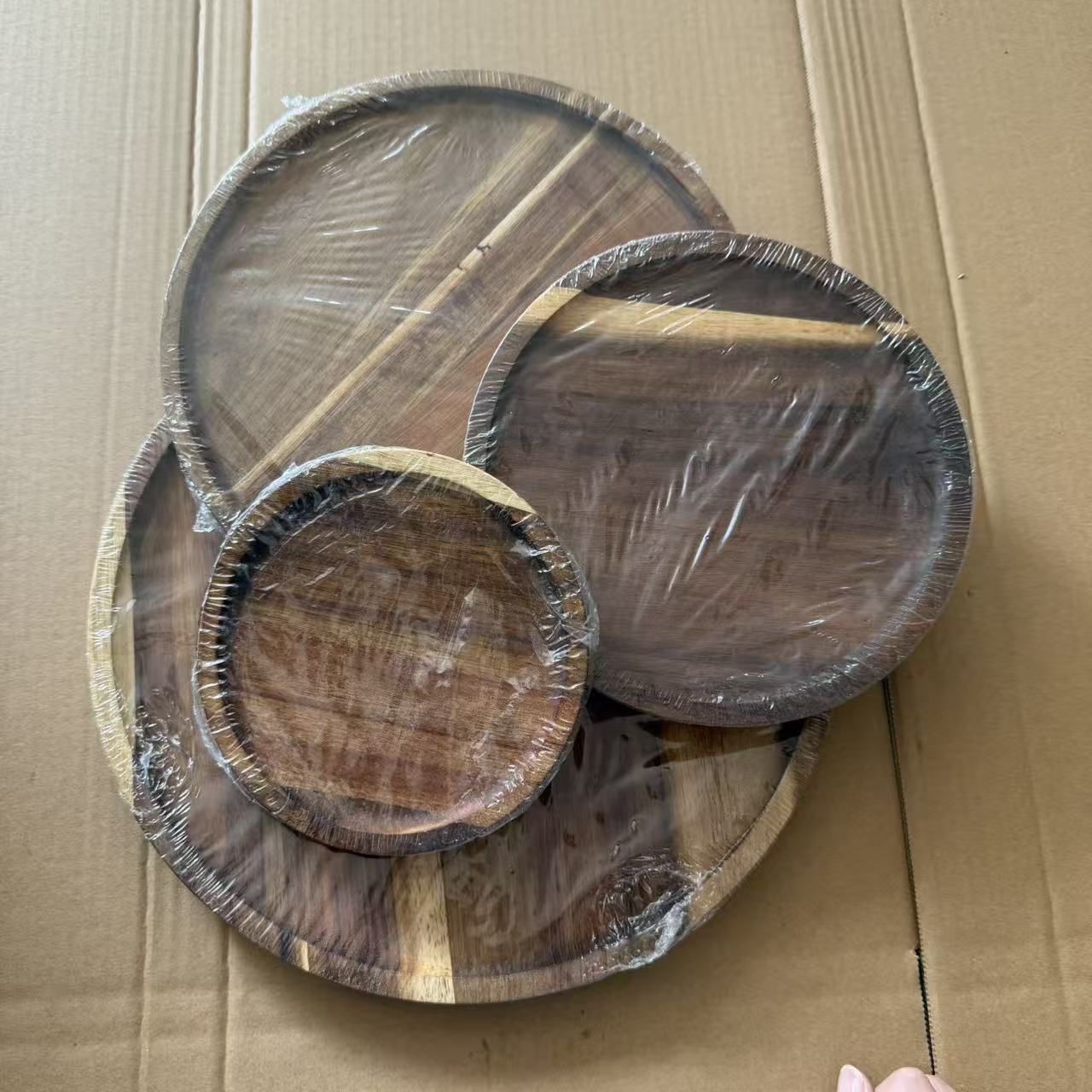
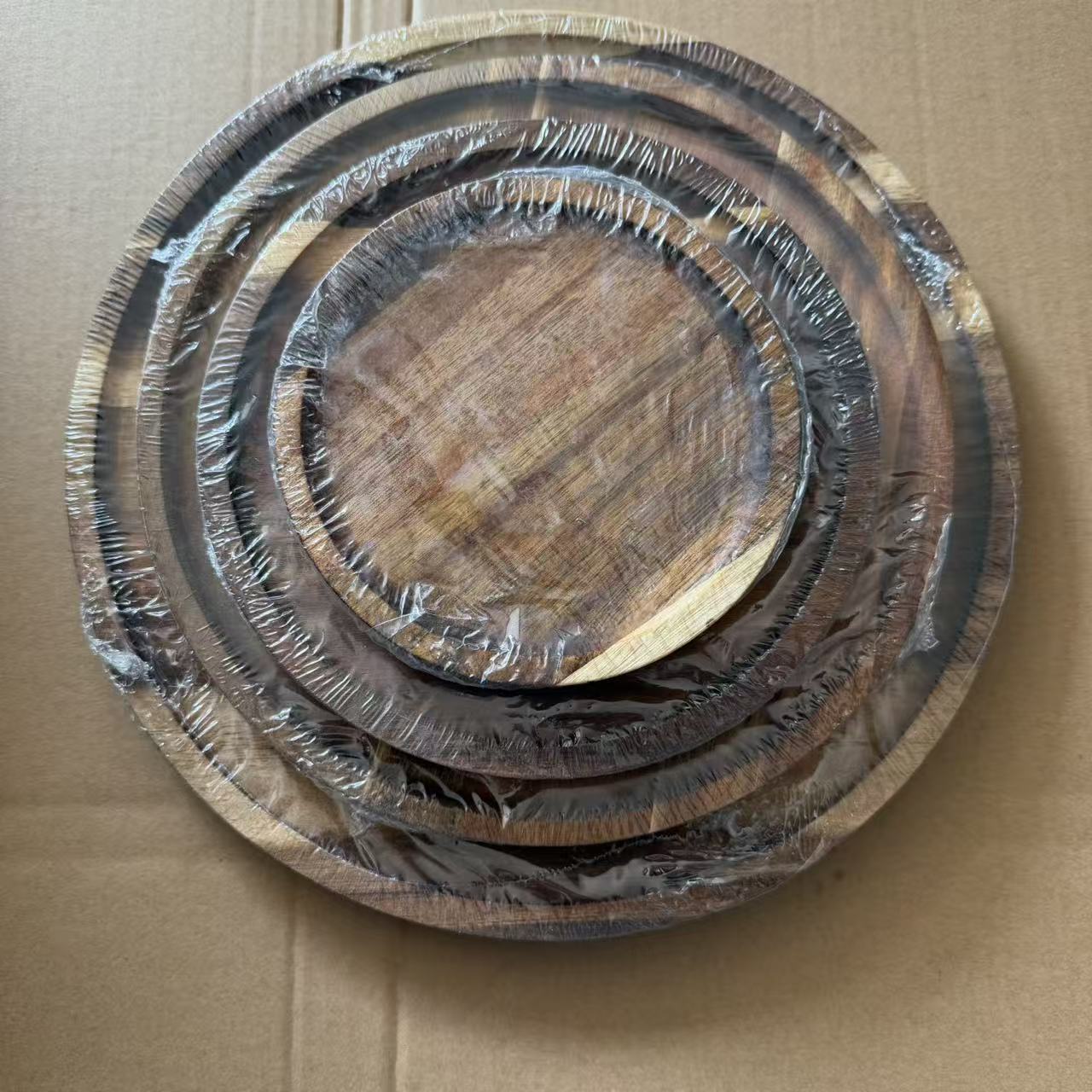
When evaluating samples, inspect more than color. Look for a stable, flat base; a smooth food-facing surface; a consistent rim transition; and edges that feel fully finished rather than sharp or fibrous. Place the sample on a known flat table, press opposite rim points, and check whether it rocks. That simple observation is more useful than a polished catalog image for a high-turn hospitality setting.
Natural grain and tone are normal in wooden dishware. The procurement question is not whether variation exists, but what range of variation is acceptable within one delivery and between reorders. Request agreed sample references, grading expectations, and a practical approval process before production. The lowest price can be attractive, but when consistent appearance across a dining room matters, controls for material selection and finishing can be worth more than a small unit-cost saving.
Verify the finish for the actual food-contact use
A Wooden dinner plate should not be selected from a vague “food safe” label alone. Food-contact expectations vary by market, food type, temperature, and intended use. U.S. FDA consumer guidance describes food-contact substances broadly to include items such as food-preparation surfaces and cookware; that is a useful reminder to ask for documentation that relates to the finished product, not merely a statement about the raw wood.
For each proposed Wooden dinner plate, ask the supplier to clarify the finish system, cure process, intended food-contact use, cleaning limitations, and documents available for the target market. Do not infer compliance from a material name, a sample appearance, or a generic claim. If your customer requires particular testing or declarations, send that requirement before sampling and have the final specification confirmed in writing.
Also distinguish durability from low maintenance. An oiled surface may suit a natural look, but it can need a defined care routine. A film-forming finish may change the appearance and repair approach. Neither is universally superior; the practical choice depends on whether the operation can follow the required care instructions and whether the finish is appropriate for the planned food-contact application.
Specify dimensions, rim profile, and handling together
Size affects both food presentation and back-of-house efficiency. Before approving a Wooden dinner plate, test it with the intended portion, garnish, sauce, and table setting. Confirm the usable flat area rather than relying only on the outside diameter. A deep rim can frame food well, but it may reduce serving area. A broad flat format can support presentation, but it may demand more storage space and change how servers carry multiple pieces.
For hotel tableware, standardization often matters as much as design. Record the diameter, height, weight range, rim detail, stacking direction, and protective packaging expectation. Then test sample pieces in the places that matter: on a tablecloth, a hard tabletop, a tray, and the storage shelf. If the plate is meant for frequent hand-carrying, check grip, balance, and whether the underside leaves enough clearance for safe pickup.
Assess cleaning, care, and replacement planning early
Wood requires a care plan. A Wooden dinner plate may be inappropriate where dishwashing, extended soaking, aggressive sanitizing chemicals, or prolonged heat exposure are unavoidable. Ask the supplier for written cleaning and maintenance guidance, then compare it with the operation’s real routine. If the instruction only works in a careful retail home setting, it may not work in a busy restaurant.
Build replacement planning into the order. Hospitality teams should ask whether the supplier can reproduce the approved size, finish, and acceptable tone range later. A small pilot order should be reviewed after live service, not only when cartons arrive. Track warping, surface change, visible marks, and staff feedback. That feedback turns a decorative selection into a usable specification for future restaurant dinnerware purchases.
Use a supplier-sample checklist before approving volume
- Wooden dinner plate purpose: direct food contact, plated presentation, buffet display, or a charger beneath another plate.
- Material and construction: wood species, solid or engineered construction where relevant, drying approach, flatness, and edge quality.
- Finish verification: finish name, intended use, cure status, cleaning limits, and target-market documentation.
- Visual control: approved sample, grain/tone tolerance, and the acceptable range for repeat orders.
- Service practicality: usable food area, weight, handling, stacking, storage, and packaging protection.
- Commercial continuity: minimum order quantities, lead-time confirmation, quality inspection points, and reorder availability.
Make the final choice on operational fit
The strongest Wooden dinner plate program is not the one with the darkest grain or the boldest shape. It is the one whose material, surface treatment, dimensions, and care requirements match the way guests are served. For high-visibility dining concepts, natural variation can become part of the tabletop story. For multi-site hospitality operations, a tighter specification may be the better decision.
Before placing a volume order, request representative samples, test them in service, confirm food-contact and care documentation for the destination market, and agree on quality tolerances for reorders. That process gives buyers a clearer basis for choosing a Wooden dinner plate that looks intentional on the table and remains practical behind the scenes.