AR

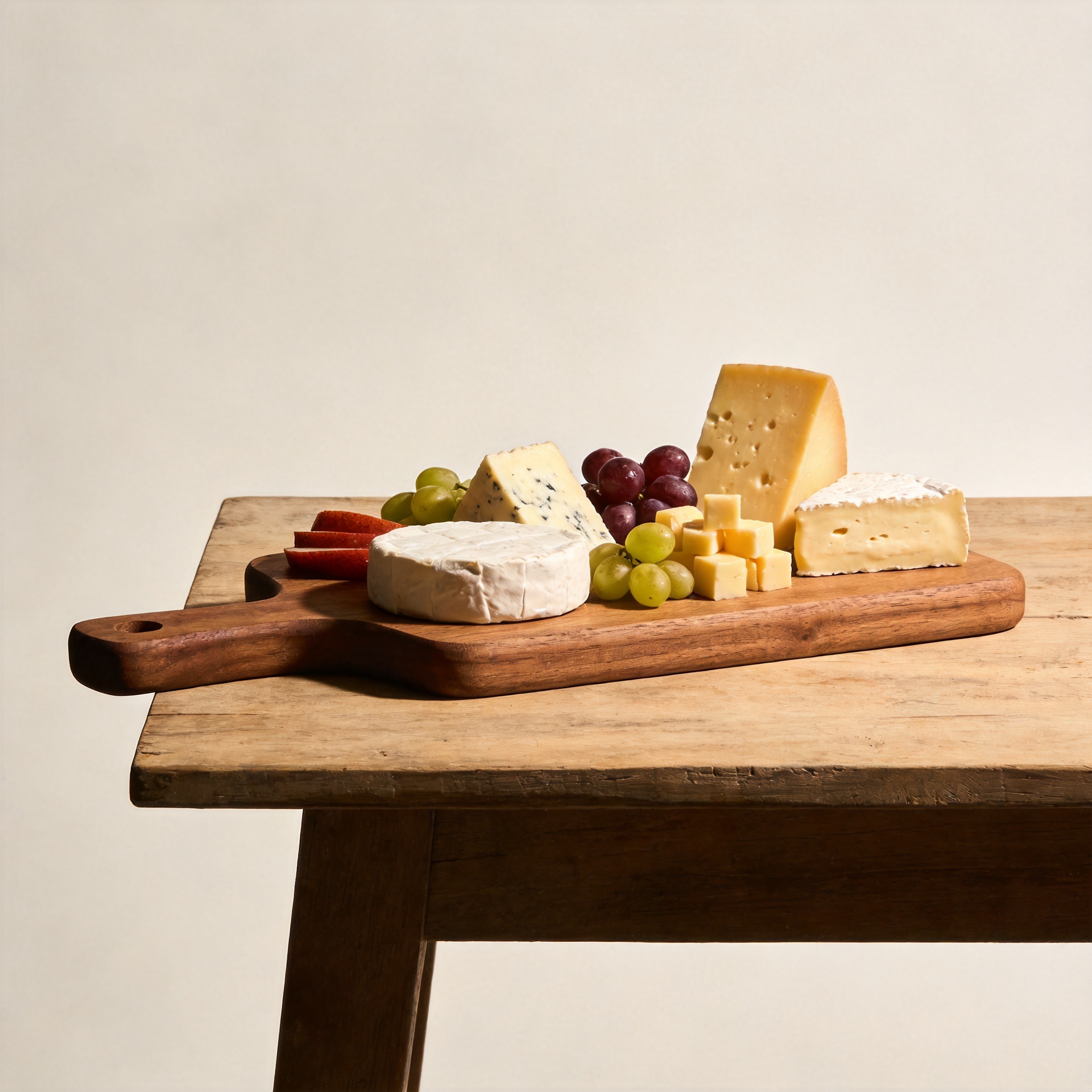
What Makes a Wooden Cheese Board Ideal for Serving Cheese?
A Wooden cheese board earns its place at the table when it does more than look warm in a product photo. It should give cheese room to breathe, keep a composed arrangement stable, feel comfortable to carry, and hold up to repeated hand washing and careful maintenance. For a retailer, importer, or hospitality buyer, the useful question is not simply “Is it wood?” but “Will this board present food well, communicate value, and remain practical in service?”
As a sourcing specialist who evaluates wooden kitchenware for retail buyers, I have found that the long-term differences come down to material consistency, surface quality, and finish discipline—not decorative grain alone. A well-chosen wooden serving piece can make a modest cheese selection feel deliberate. A poorly specified one can absorb odours, show rough edges, or create avoidable care complaints.
Why wood works for cheese presentation
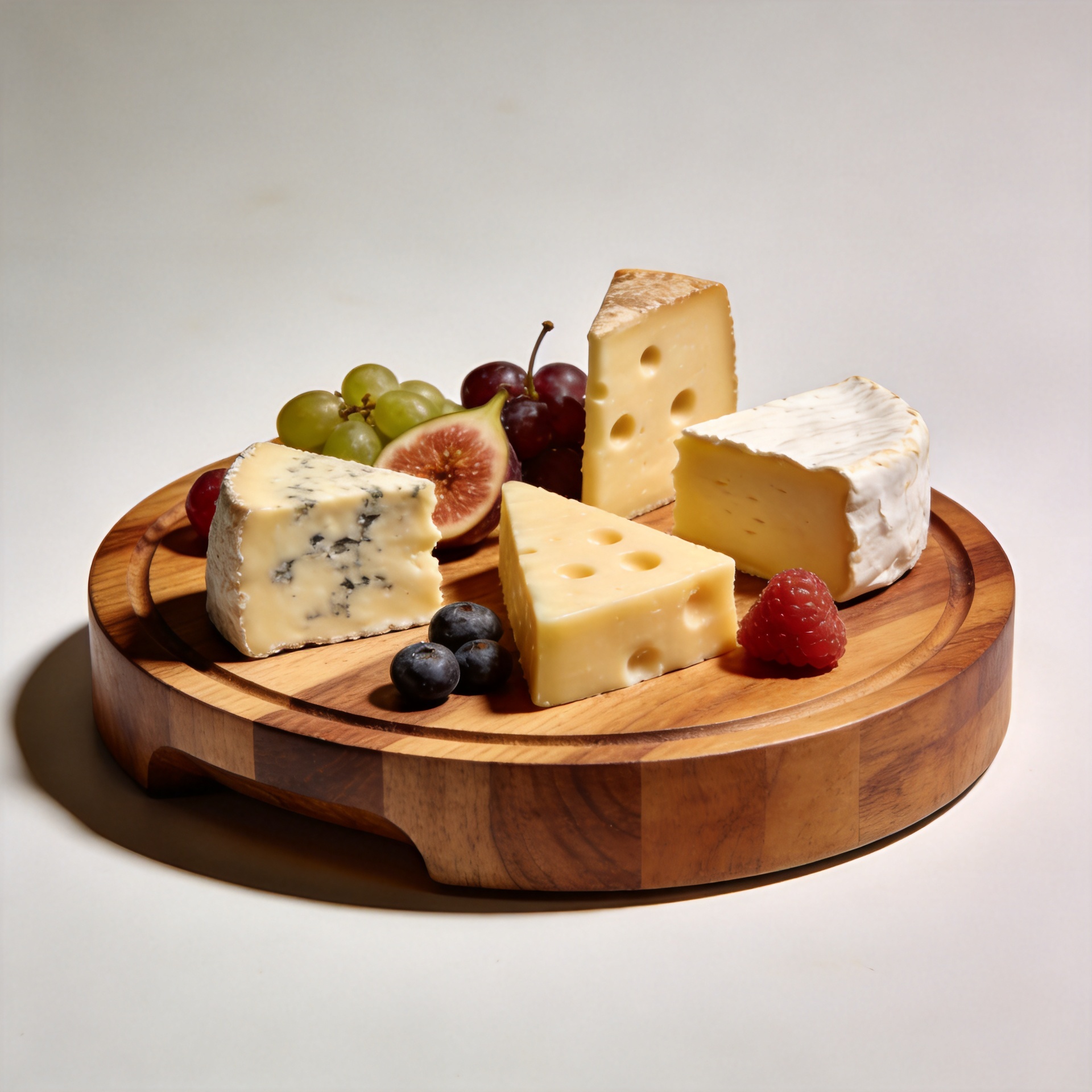
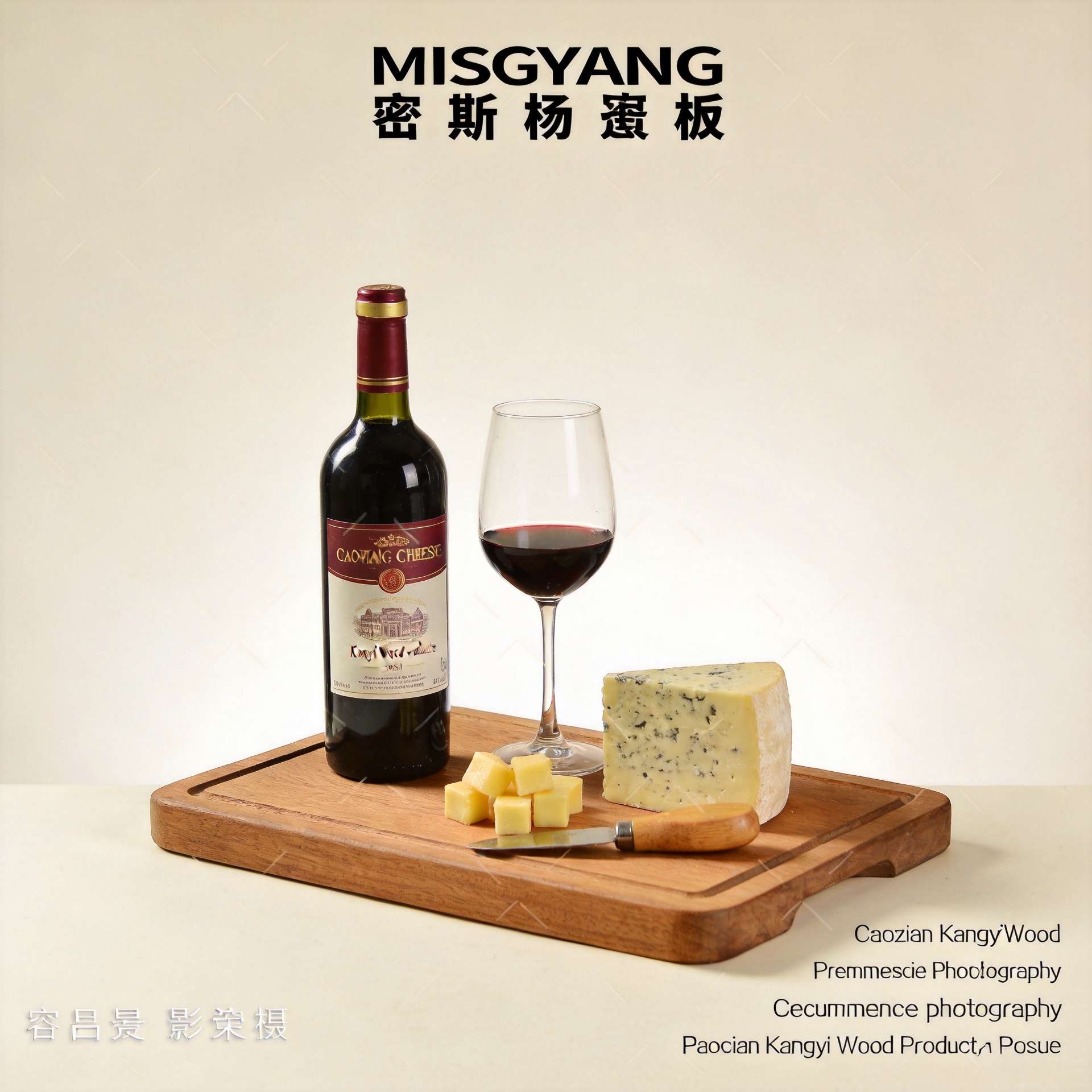
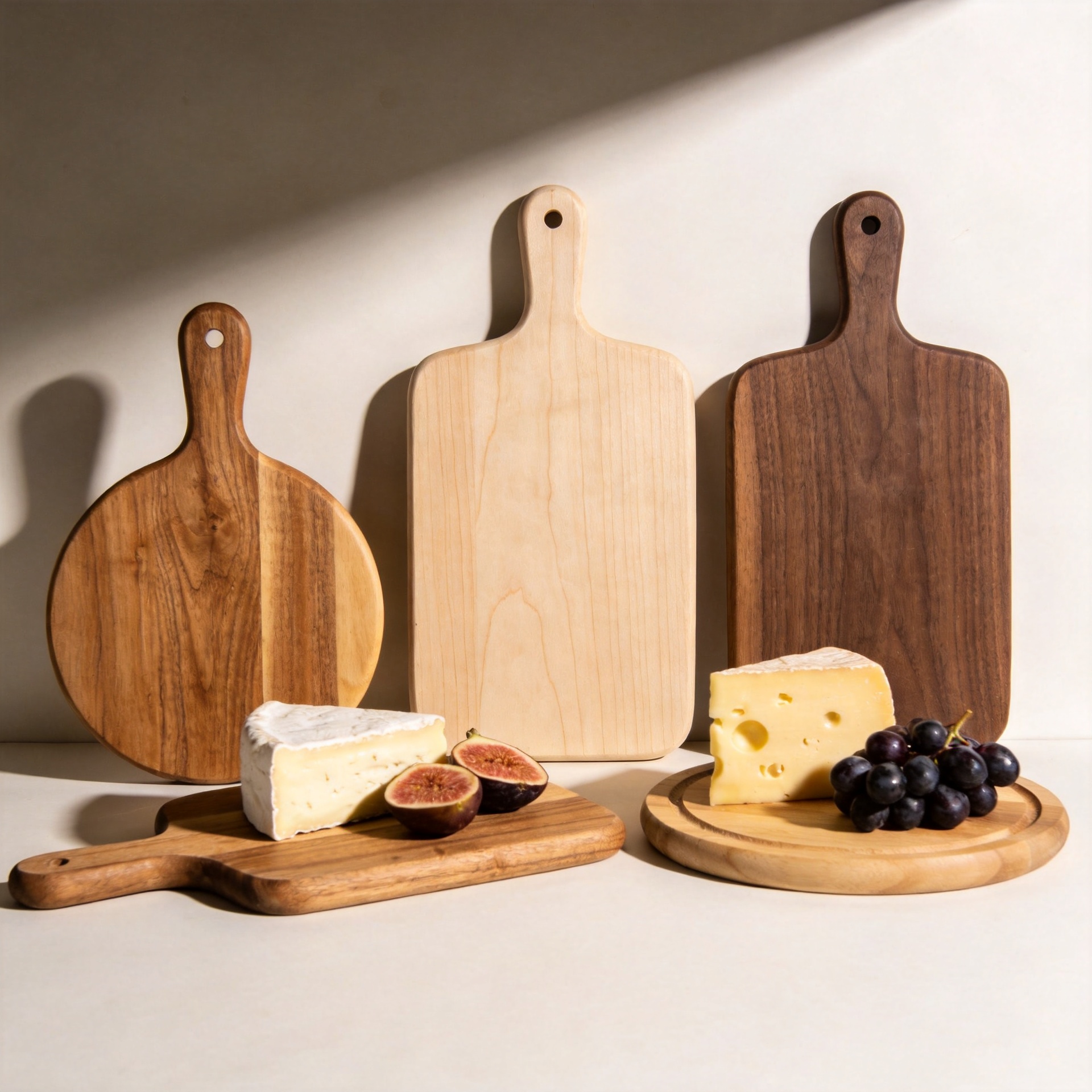
Cheese is usually served as ready-to-eat food, often alongside fruit, crackers, nuts, or cured meats. In that setting, a Wooden cheese board offers a quieter visual background than a patterned plate and helps separate the presentation from everyday prep equipment. The grain adds natural variation, while a substantial board gives guests a clear place to cut, share, and return to during a gathering.
There are several valid materials for a cheese platter. Marble stays cool, slate creates contrast, and ceramic can be simple to clean. Wood, however, is particularly effective when the aim is a warm, relaxed presentation that can move from kitchen to table without looking utilitarian. The board should not compete with the cheese. Its color, grain, and silhouette should frame the food rather than dominate it.
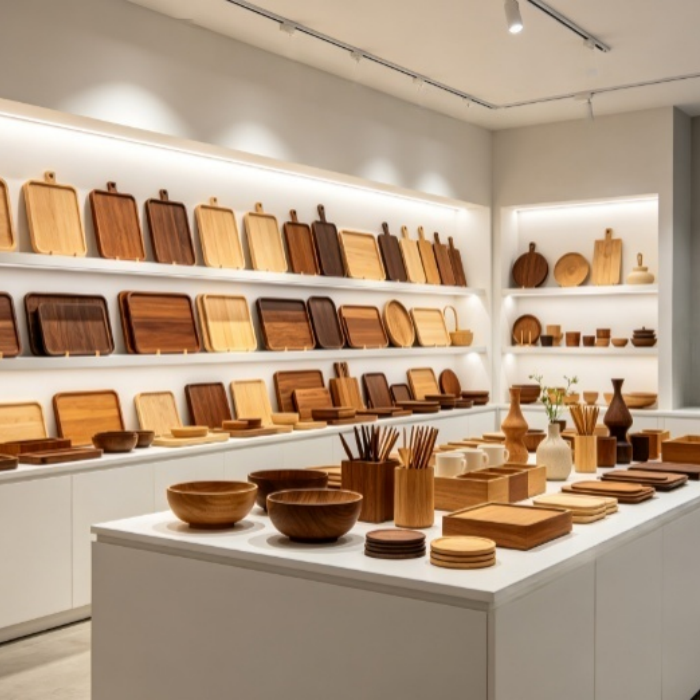
For buyers building a coordinated housewares range, acacia is often considered because its pronounced grain and warm tones create visible differentiation. Natural variation needs to be presented honestly: no two boards will look identical, so product photography and buyer expectations should allow for differences in color and figure.
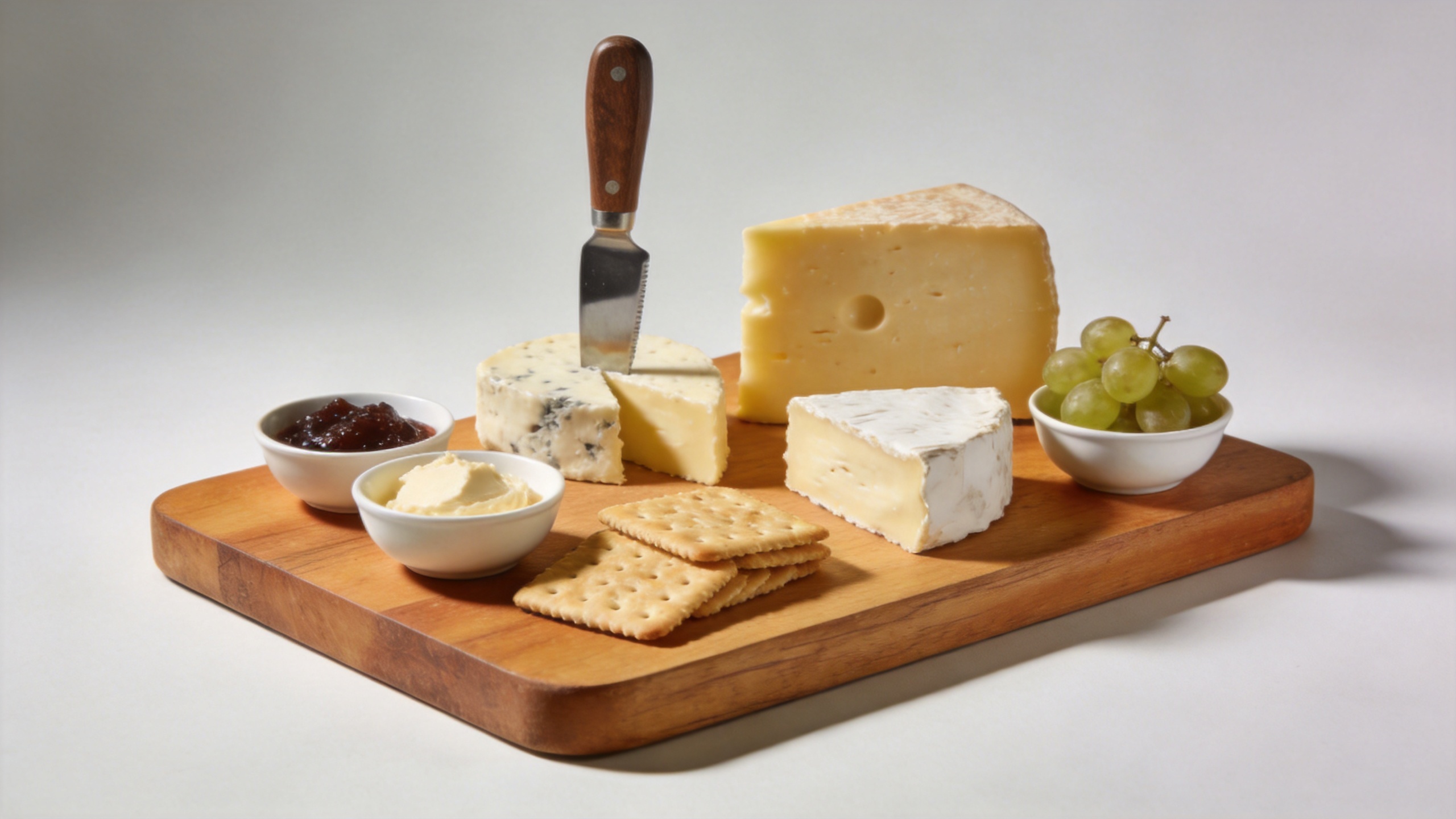
The five qualities that make a wooden cheese board useful
1. A smooth, well-finished surface
The working surface is the first quality check. A good Wooden cheese board should feel smooth to the hand, without splinters, raised grain, deep cracks, loose filler, or a heavy odor from the finish. Small knife marks will develop with use; that is normal. The concern is a surface that is rough from the start or difficult to clean after ordinary serving.
For commercial food-service environments, local rules may set more specific requirements. The FDA Food Code emphasizes durable, smooth, and easily cleanable equipment surfaces. That does not turn every wooden appetizer tray into a commercial-prep surface, but it is a helpful design and inspection principle: inspect the finish, seams, joints, and edges rather than relying on a “food safe” label alone.
2. A practical size and usable layout
An effective cheese platter leaves room between items. A crowded board makes it difficult to cut soft cheese cleanly or distinguish flavors. Buyers should evaluate the usable surface—not only the outside dimensions—and plan for the intended occasion. A compact board can serve two people; a broader rectangular or round format works better when the assortment includes several cheeses, accompaniments, and serving knives.
Think through how the serving board sits on the table. Is the base stable? Are the corners comfortable to handle? Does a raised rim trap crumbs and moisture, or does it help contain loose items? These details often matter more after the first wash than during a showroom review.
3. Material thickness and construction that feel balanced
Heavier does not automatically mean better for serving. A board that is too light may slide or feel disposable; one that is overly thick can be awkward for guests to pass. The right balance depends on dimensions, edge profile, and intended use. A buyer should lift the sample, place it on a flat surface, and check whether it rocks, flexes, or has sharp transitions around the perimeter.
End-grain, edge-grain, and single-piece constructions each create different appearances and manufacturing considerations. Instead of assuming one is universally superior, request clear specifications about material, joining method, thickness tolerance, and the quality-control checks used for cracks, warping, and surface finish. Consistency across a production run is more valuable than a single impressive sample.
4. A finish with clear food-contact documentation
A Wooden cheese board is meant to contact ready-to-eat food, so buyers should ask what finish is used and what supporting documentation is available for the intended market. “Natural” is not, by itself, a compliance description. Nor is “food safe” a universal standard that means the same thing in every country.
For retail or hospitality procurement, the practical request is straightforward: confirm the intended food-contact use, ask for applicable test reports or declarations, and review labeling and care instructions before an order is finalized. This is especially important when coatings, stains, adhesives, or decorative hardware are involved. A board that will be used only as a decorative cheese platter may have a different specification from one intended for frequent direct food service.
5. Care guidance that matches real use
Wood benefits from reasonable care. Hand washing, prompt drying, and periodic conditioning when appropriate help retain the appearance of a wooden serving board. Soaking and dishwashers are commonly poor choices for wood because repeated moisture and heat can stress the material. The care message should be visible in packaging or product information, not left for consumers to discover after a complaint.
USDA guidance notes that both wooden and plastic cutting boards can be sanitized using a solution of 1 tablespoon of unscented liquid chlorine bleach per gallon of water, followed by rinsing and drying. That reference is useful for general care planning, but it is not a substitute for local food-service rules or the supplier’s finish-specific instructions. For raw meat or high-risk food preparation, use separate equipment and follow the sanitation process required in the destination market.
Cheese board, charcuterie board, or serving board?
The terms overlap, but the intended layout changes the specification. A cheese platter generally benefits from open space for wedges, soft cheeses, knives, and labels. A charcuterie board needs additional room for meats, small bowls, and moist accompaniments. A general serving board may prioritize handles, a rim, or carrying stability.
- For a cheese platter: prioritize a clean, open surface and a shape that supports easy portioning.
- For a charcuterie board: allow space for small dishes and choose a surface that is easy to wipe between uses.
- For a wooden appetizer tray: assess grip, edge comfort, and stability during carrying as carefully as the display area.
One format can serve all three roles, but only if the dimensions and construction support the actual serving ritual. A long narrow board may photograph well yet leave little space for cheese knives. A handled tray may travel easily but have less continuous cutting area. Match the format to the customer’s use case before choosing decorative details.
A buyer’s inspection checklist
- Run a hand over the surface and perimeter to check for roughness, splinters, cracks, and sharp edges.
- Set the board on a flat surface to test stability and inspect any feet, handles, or joints.
- Confirm usable serving area, not just external dimensions, against the intended number of guests and accompaniments.
- Request the wood species, construction method, finish description, care instructions, and food-contact documentation relevant to the destination market.
- Review samples after washing and drying, then define acceptable natural color and grain variation for production.
- Check packaging protection and include care messaging so the board reaches the consumer in presentation-ready condition.
The practical conclusion
An ideal Wooden cheese board is not defined by wood grain alone. It combines a smooth usable surface, a stable and proportionate format, thoughtful construction, verifiable finish information, and realistic care guidance. When those elements align, the board becomes more than a backdrop for cheese: it is a serving piece that supports sharing, presentation, and repeat use.
For buyers, the most reliable approach is criteria-based selection. Evaluate the sample in the way a guest or end customer will use it, verify the claims that matter for the target market, and make care expectations part of the product offer. That is how a wooden serving board can deliver both visual warmth and dependable everyday value.