AR

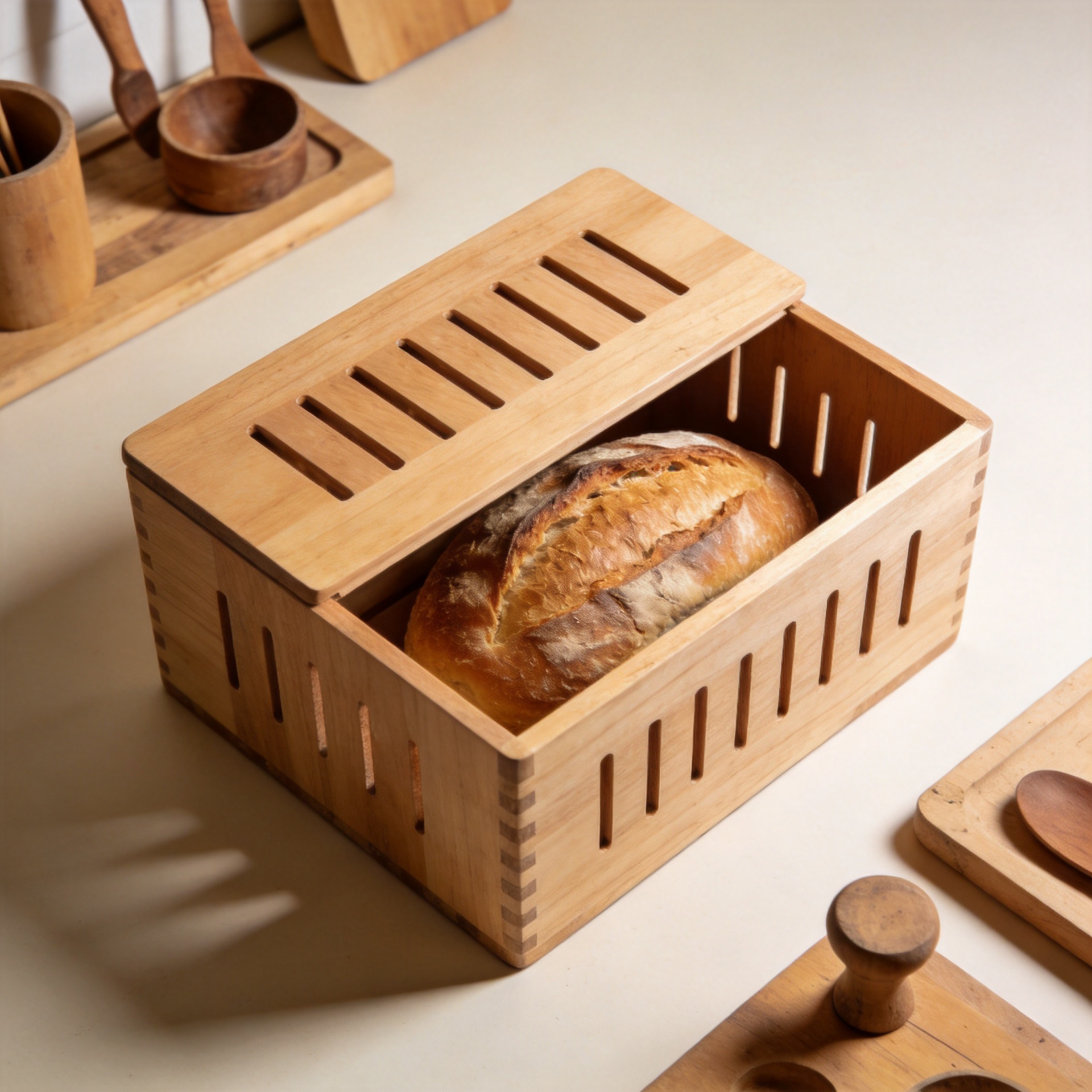
Wooden Bread Storage Box Materials and Ventilation Design Explained
A wooden bread storage box looks simple, yet its material and airflow decisions determine whether it works as a practical counter-top tool or merely as décor. For anyone comparing a wood bread bin for a home range, a bakery display, or a kitchenware assortment, the key is to manage two competing needs: bread should not dry out too quickly, but trapped humidity should not linger long enough to soften crusts or support mold.
As a wood-product sourcing specialist, I would not treat “wooden” as an automatic freshness claim. Wood species, wall thickness, lid fit, interior coating, and ventilation design all affect daily use. The appropriate choice depends on the bread being stored, the local climate, and how often the box will be cleaned.
What a wooden bread storage box is meant to do
A bread box is a middle ground between leaving a loaf exposed and sealing it tightly in an impermeable container. Fresh bread releases moisture after baking; meanwhile, its starch structure changes over time, which contributes to staling. A well-considered wooden bread storage box slows abrupt moisture loss while allowing enough exchange with the room to avoid a damp microclimate.
That balance matters most for crusty loaves, sourdough, rolls, and uncut bakery bread. Soft packaged bread already has its own packaging and may not benefit from being transferred. No food storage box can make bread indefinitely fresh, and visibly moldy bread should be discarded rather than “aired out.”
Material choices: what changes in a wood bread bin
Solid wood
Solid wood gives a wood bread bin a warm appearance, a stable feel, and the possibility of durable joinery. Harder hardwoods can resist everyday knocks better than very soft woods, but species alone does not define performance. Grain direction, kiln drying, panel construction, and finish quality influence whether a box stays square when kitchen humidity changes.
Look for smoothly sanded interiors, joints that are flush rather than sharp, and a lid that operates without scraping. Because bread is stored nearby, ask the supplier which finish is used on interior surfaces and request relevant food-contact documentation where the market requires it. “Natural” does not automatically mean untreated or suitable for every food-contact expectation.
Bamboo, engineered panels, and mixed construction
Bamboo and engineered wood can be sensible choices when a consistent surface, lower weight, or a specific price point is the priority. What matters is not a material label alone but how exposed edges are sealed and how the interior tolerates routine wiping. Unsealed joints or rough cutouts can retain crumbs and become harder to clean.
A mixed-material kitchen storage solution may combine a wooden body with metal hinges, a clear viewing panel, or a roll-top track. These features can improve usability, but they also add inspection points: hinge attachment, track clearance, and whether a panel changes the available airflow.
Finish and cleanability
For a wooden bread storage box, a lightly sealed, wipeable interior is often more practical than a highly textured unfinished surface. The finish should be described accurately rather than assumed to be food-safe, antibacterial, or waterproof. Daily care is straightforward: remove crumbs, wipe with a barely damp cloth when needed, dry the box fully, and avoid soaking or dishwasher cleaning. Persistent odor, staining, or visible mold calls for more than a quick wipe; follow the maker’s care guidance and assess whether replacement is safer.
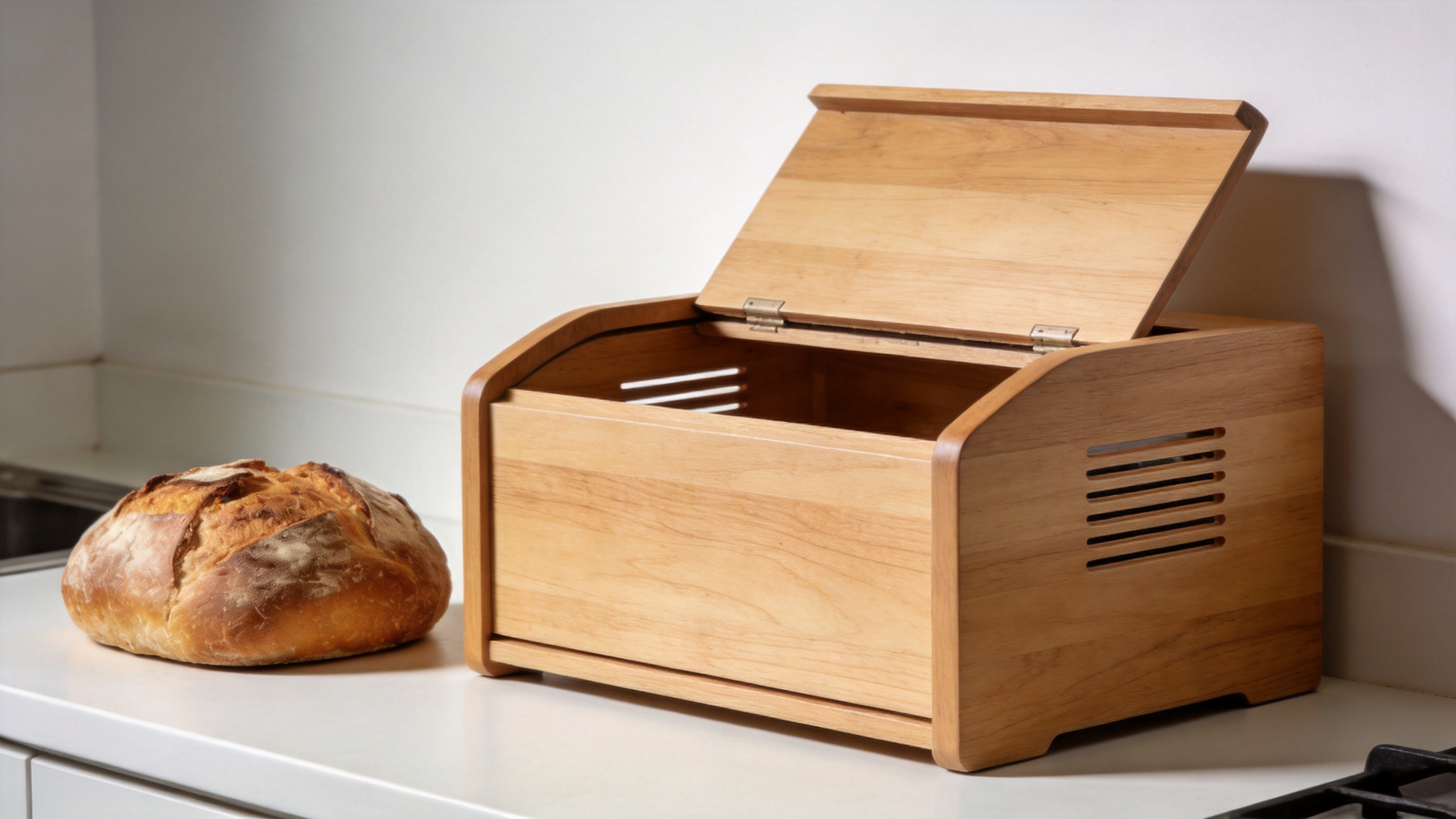
Ventilation design: small openings, deliberate effect
Ventilation design is not about making the box drafty. It is about creating a modest path for humid air to leave while preventing the loaf from being exposed like it would be on an open counter. In practical tests, examine the box with its lid closed rather than judging only by marketing photos.
| Design detail | What it can help with | What to check |
|---|---|---|
| Rear or side slots | Allows humidity to escape away from the front display surface. | Slots should be smooth, easy to wipe, and not so large that crumbs escape constantly. |
| Small lid perimeter gap | Creates passive air exchange without a visibly perforated body. | Confirm that the lid still closes consistently and does not warp or bind. |
| Raised feet or lower gap | Keeps the base off a wet counter and can support subtle airflow around the box. | Feet should be stable, non-marking, and easy to clean around. |
| Roll-top or louvered front | May provide distributed gaps while offering easy access. | Check for pinch points, crumb traps, and adequate clearance for a full loaf. |
Too little ventilation can leave a recently baked loaf in a humid enclosure. Too much ventilation can dry bread sooner, especially in an air-conditioned or naturally dry kitchen. This is why a tight gasketed lid—excellent for many pantry goods—is not automatically the right choice for a wood bread bin.
Match the box to the bread and the room
Start with the bread, then consider the environment. A fresh crusty loaf benefits from cooling completely before it enters a wooden bread storage box; placing warm bread inside traps steam regardless of how well the box is vented. For a typical room-temperature storage setting, a practical guide places fresh bread around 18–22°C (64–72°F), but local humidity and the recipe still matter.
- Humid kitchen: prioritize visible or concealed air paths, easy cleaning, and a routine of checking crumbs and condensation.
- Dry kitchen: avoid oversized vents and thin, loosely fitting lids that may accelerate moisture loss.
- High-turnover household: choose broad access and a simple interior; convenience makes proper cleaning more likely.
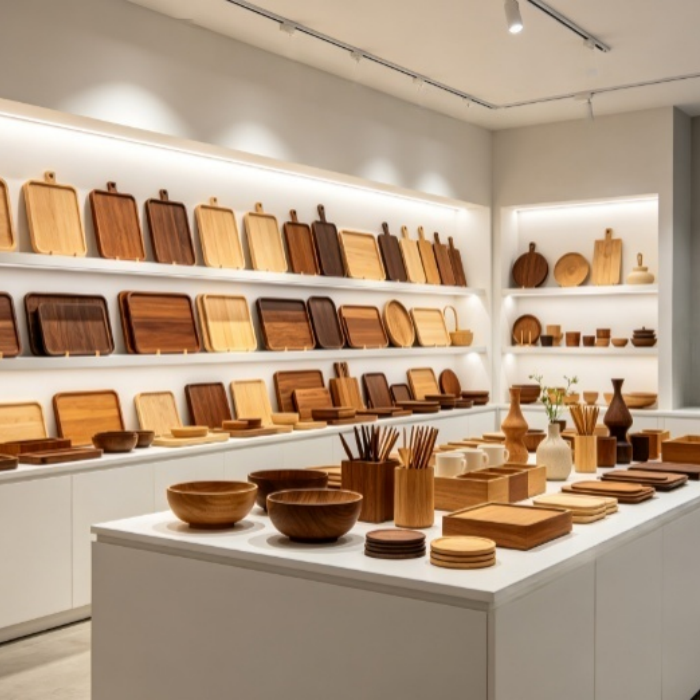
- Retail or wholesale assortment: assess lid endurance, hinge or track consistency, surface finish, packing protection, and documentation—not just the front-facing grain.
A sourcing and quality checklist
When comparing a wooden bread storage box for a buyer’s assortment, request a sample and use it as a functional test, not only a photography sample. Open and close the lid repeatedly. Place a standard loaf inside. Wipe the interior. Inspect corners and vent edges. Then ask how the material was dried and what inspection points are used for flatness, finish uniformity, and hardware security.
- Confirm usable interior dimensions, including lid or roll-top clearance.
- Check that all ventilation openings are smooth and accessible for cleaning.
- Ask for the exact wood or panel specification and the finish description.
- Review care instructions: hand cleaning, drying, and what users should avoid.
- For food-contact claims, request market-appropriate documentation instead of relying on generic wording.
- For private-label programs, define acceptable natural grain and color variation before production.
The practical conclusion
A well-matched wooden bread storage box is neither the most sealed box nor the most heavily vented one. It is a cleanable, well-built food storage box that lets a cooled loaf sit in a stable room environment with measured airflow. Solid wood, bamboo, and engineered constructions can all work when the fit, finish, and ventilation design are appropriate.
For buyers developing a kitchen storage solution, the clearest product story is also the most credible one: explain the material, show the air path, provide realistic care instructions, and avoid promising a fixed shelf life. That approach helps users select a wood bread bin for the conditions they actually have—and helps a product range earn trust after it reaches the kitchen counter.