AR

Wooden Storage Rack Materials and Load Capacity Explained.
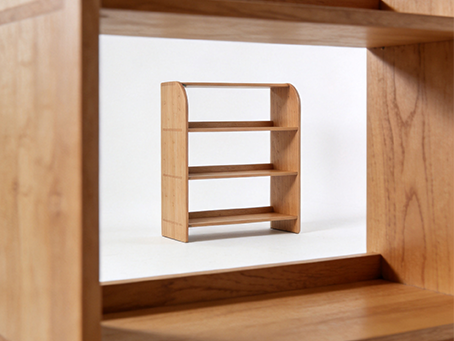
A wooden storage rack can look uncomplicated: upright posts, shelves, a few joints, and a warm finish. For a buyer, however, the important question is not whether it looks solid in a catalog. It is whether the material, shelf span, joinery, and installation method work together for the intended load. That distinction matters for supermarkets, trading companies, and brands building a dependable home-storage range.
From a materials-inspection perspective, wood species alone does not establish load capacity. A hardwood rack may have a good starting point, but a shelf can still sag if its span is too long, a joint can still loosen if the fastener is poorly chosen, and a freestanding unit can still be unsafe if it is not designed or anchored for its use. The right storage solution starts with the full structure, not a single material label.
Why material is only one part of a wooden storage rack rating
Buyers often ask whether solid wood is “stronger” than plywood, engineered board, or a mixed wood-and-metal design. There is no universal ranking without dimensions and loading conditions. For a wooden storage rack, capacity depends on five connected variables:
- Wood or panel type: density, grain orientation, grade, moisture condition, and defects influence stiffness and strength.
- Shelf geometry: thickness, depth, clear span between supports, and edge reinforcement determine how readily a shelf bends.
- Frame design: uprights, cross rails, back panels, and diagonal bracing control racking and sway.
- Joinery and hardware: screw withdrawal resistance, dowels, mortise-and-tenon joints, metal brackets, and glue lines must transfer load reliably.
- Use and installation: evenly distributed items behave differently from a dense box at mid-span; wall anchoring, floor levelness, and anti-tip provisions also matter.
This is why a useful specification says “maximum evenly distributed load per shelf under defined support conditions,” rather than simply claiming a rack is sturdy.
Comparing common materials
Solid hardwood
A solid hardwood rack can provide good stiffness and a premium appearance when boards are properly dried, graded, and oriented. Acacia, oak, rubberwood, and similar hardwoods can all be used in wood furniture, but their real performance still depends on shelf thickness and unsupported span. Natural grain variation also means pieces should be selected and assembled with attention to knots, checks, and grain direction near joints.
Solid wood expands and contracts with humidity. That is not automatically a defect; it is a material behavior that should be accommodated in the design. A rack intended for a dry living space may need a different finish, panel detail, or tolerance than one used in a damp utility area.
Plywood and other engineered panels
Quality plywood can be a practical material for a shelving system because its cross-laminated construction distributes strength across directions and can offer consistent flatness. Yet “plywood” is not a load rating. Panel grade, thickness, span, support spacing, edge support, and fastener design all matter. APA guidance similarly distinguishes span ratings from uniform-load tables: the correct capacity comes from specified panel and support conditions, not from a generic product name.
Particleboard and MDF can create smooth, economical shelves for light-duty indoor organization, but they are more sensitive to moisture exposure and screw-holding details. For a loaded freestanding unit, a buyer should ask how shelf edges are reinforced, how the board is supported, and whether the fasteners bear into a structural member rather than only the panel face.
Hybrid construction
Wood shelves paired with a metal frame, brackets, or concealed reinforcement can shorten the effective span and improve resistance to sway. It is a sensible option when the desired appearance is wood but the intended load is higher or more concentrated. Still, the rating belongs to the complete assembly. A strong bracket does not compensate for a thin shelf board, and a strong shelf does not compensate for inadequate wall fixing.
Load capacity: separate bending, joints, and stability
The most common mistake is treating a published per-shelf number as the whole story. Evaluate a wooden storage rack in three layers.
- Shelf bending: A shelf deflects most at the center when items are placed across it. Longer spans increase deflection sharply, so adding a center support, rail, or divider can make a meaningful difference without changing the visible material.
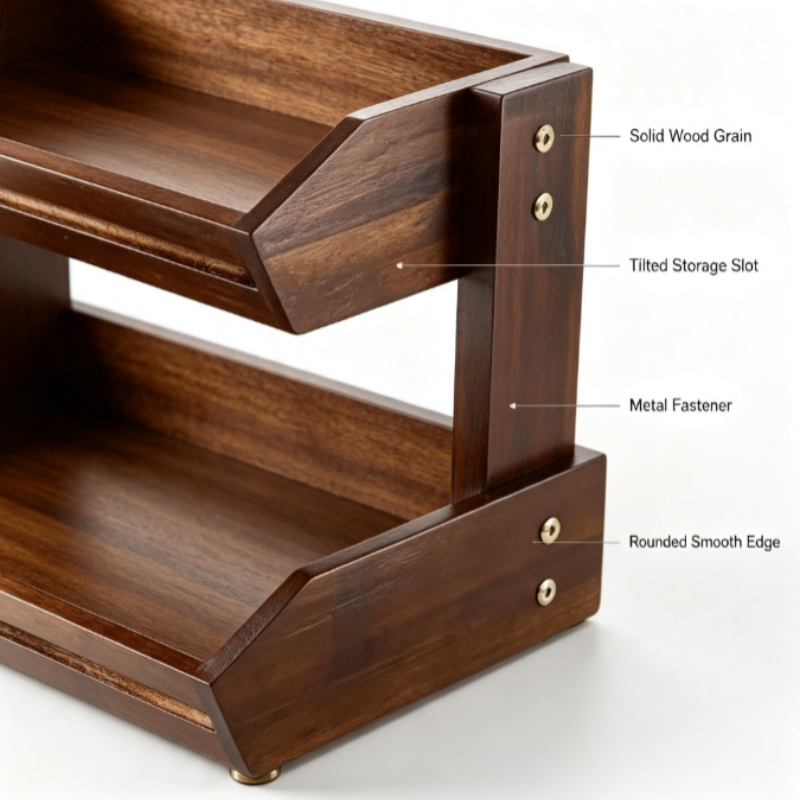
- Connection capacity: The shelf may survive while screws, brackets, pins, or glued joints become the weak point. Inspect connection locations for adequate engagement, proper predrilling where needed, and load paths that do not rely on decorative components.
- Whole-rack stability: Tall units experience tipping and side-to-side racking. A back panel, diagonal brace, broad base, level feet, and appropriate anti-tip anchoring can be just as important as shelf strength.
One practical screening reference for shelf design targets initial sag of no more than 0.02 inch per foot of span, roughly 1.7 mm per metre, under load. It also cautions that long-term sag can exceed initial deflection. Use that as a conversation starter with a manufacturer, not as a substitute for a tested product rating. A shelf that looks acceptable on day one may not perform the same after sustained loading and seasonal humidity changes.
How to read or request a usable capacity claim
Before listing capacity for a wooden storage rack, ask the supplier to define the test and the exact configuration. A credible request includes:
- Load stated per shelf and for the complete rack, with units clearly identified.
- Whether the load is evenly distributed or concentrated at a point.
- Shelf dimensions, thickness, clear span, and support positions.
- Wood species or panel specification, including any veneer, core, or reinforcement.
- Joint and fastener details, plus whether wall anchoring is required to achieve safe use.
- Test duration, acceptance criteria, and observations for deflection, permanent set, joint movement, and tipping.
- The intended environment: indoor residential, retail display, pantry, utility room, or another specific setting.
Do not compare two load claims until these conditions match. A shelf tested with uniformly distributed lightweight cartons is not equivalent to one carrying dense books, cookware, or small boxed goods concentrated in the middle.
A buyer checklist for a dependable shelving system
When reviewing samples, move past the finish. Place representative loads in the center and near the shelf edges, inspect whether the unit rocks on a flat floor, and recheck joints after assembly and short-term loading. We almost treat flatness tolerance as a minor specification; in practice, a rack that rocks will transfer load unevenly and make otherwise sound construction feel unreliable.
For repeat orders, document the approved sample’s shelf thickness, rail size, fastener type, material grade, finish, packaging, and assembly instructions. Natural wood variation is expected, but the structural features should be controlled. This is especially important for a retailer whose planogram depends on a consistent storage solution across locations.
Choosing the right construction for the use case
There is no universally right material. A compact decorative rack for lightweight household items can prioritize finish quality and modest shelf spans. A book, pantry, stockroom, or retail-display rack needs a more conservative approach to span, bracing, fasteners, and anchoring. If the intended product must carry higher loads, the safer decision may be a shorter shelf span, thicker component, engineered reinforcement, or a hybrid design rather than simply choosing a denser wood.
Caoxian Kangyi Wood Products works across wood storage racks, wooden kitchenware, and wooden furniture, which is relevant because structural woodworking requires more than surface appearance. For buyers developing a shelving system, the productive next step is to share intended dimensions and item weights, then request an assembly-specific recommendation and sample evaluation plan. That approach produces a more dependable wooden storage rack than a broad “heavy-duty” claim ever can.
Final takeaway
Material selection matters, but capacity comes from the entire design. Choose a wooden storage rack by looking at wood or panel quality, shelf span, thickness, support layout, connections, bracing, and installation as one system. Ask for clearly defined test conditions, verify the sample under representative loading, and use conservative design choices whenever the load is dense, long-term, or concentrated. That is how a good-looking piece of wood furniture becomes a reliable storage solution.