AR

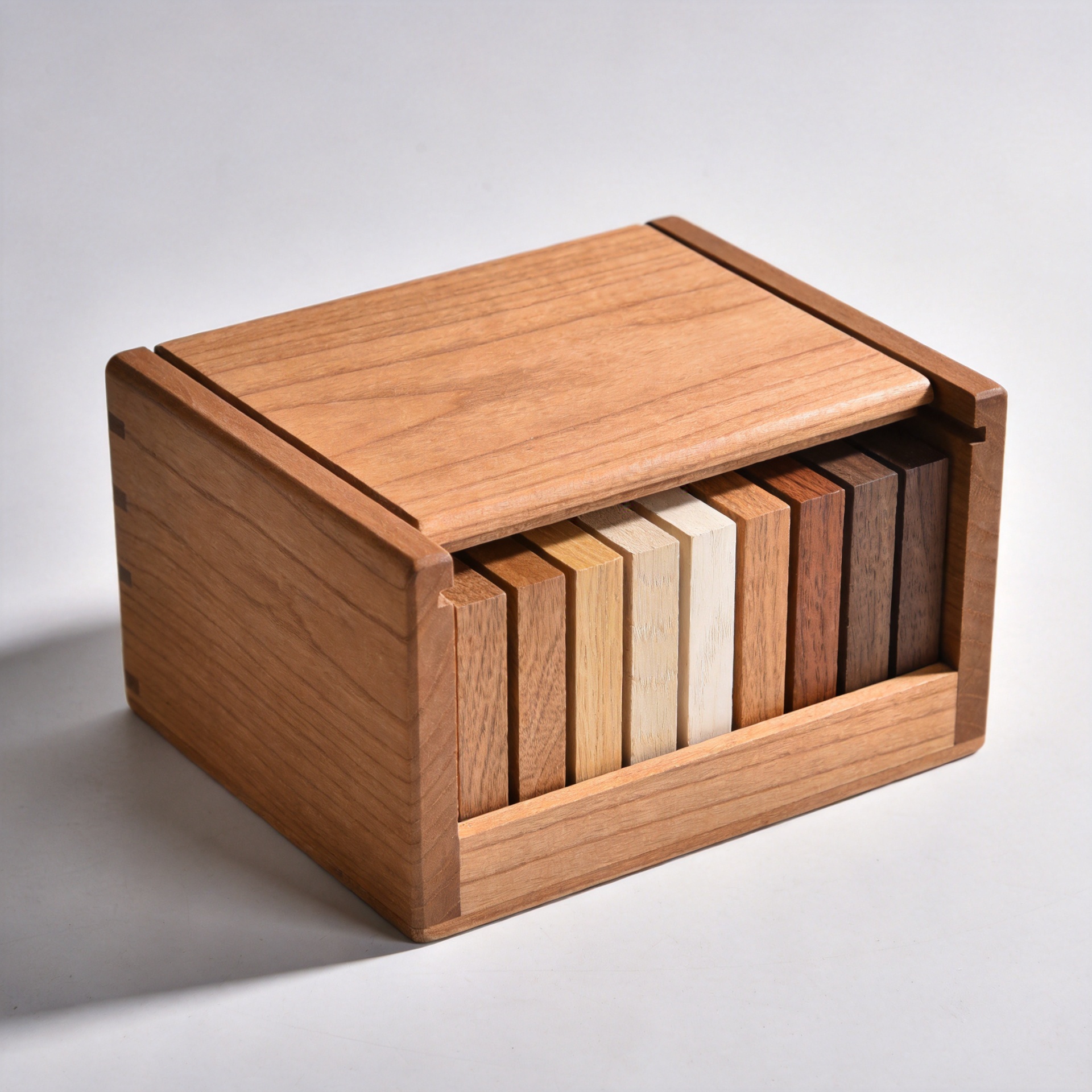
What Wood Types Are Best for a Wooden Storage Box?
A wooden storage box looks simple, but the wood choice determines whether it stays square, resists everyday dents, accepts a clean finish, and suits the items inside. For retailers and trade buyers, the question is not which species is universally “best.” It is which material matches the intended use, expected price point, finish, and production method. A small keepsake box, a stackable wooden organizer, and a large lidded wood storage box place different demands on the material.
From a wood-product sourcing perspective, appearance is only the starting point. A dramatic grain can sell a sample, but material consistency and finish durability usually decide whether a wooden storage box performs well across a production run. The practical answer is to compare hardwoods, softwoods, and engineered panels against the box’s use rather than selecting by color alone.
Start with the job your wooden storage box must do
Before choosing among storage box materials, define the load, location, and user expectations. A wooden storage box for lightweight craft supplies can prioritize economy and paintability. A box for watches, documents, tea, or accessories benefits from a stable substrate, a smooth interior, and a lid that remains aligned. A retail display box needs repeatable color and dimensions across many units. If the box may be handled frequently, stacked, or moved through a busy entryway, dent resistance and joinery matter more.
Wood also exchanges moisture with its surroundings. USDA material guidance explains that this exchange varies with humidity, temperature, and the wood’s current moisture level. That is why even a premium solid wood box can develop gaps, sticking lids, or panel movement if lumber is not appropriately conditioned or if the design does not allow for movement. A finish slows moisture exchange; it does not make wood completely waterproof. For a wooden storage box, sealing the interior, underside, edges, and lid consistently is a practical quality-control detail.
Strong all-around choices: oak, maple, and acacia
Oak for visible grain and dependable everyday use
Oak is a strong candidate when a wooden storage box should feel substantial and show recognizable natural grain. Its open grain gives a traditional or rustic character, especially under clear stain or oil. Oak works well for medium-to-large boxes, household storage, and retail collections where a warm, furniture-like look is wanted. It is not automatically the right choice for every small wooden organizer: the pronounced grain may require extra filling or sanding when a perfectly smooth painted finish is the goal.
Maple for a clean, refined surface
Maple suits a wooden storage box that needs a light, even appearance and good resistance to routine wear. Its fine, close grain supports crisp edges and a polished feel, making it useful for gift boxes, desktop organizers, and boxes with engraved or branded details. Search material references commonly place hard maple around 1,450 lbf on the Janka scale and white oak around 1,360 lbf; those figures are useful directional indicators of dent resistance, not guarantees for a finished box. Grain orientation, wall thickness, joinery, and finish still matter.
Acacia for contrast and character
Acacia is often chosen for a solid wood box when a stronger color contrast and lively grain are part of the product appeal. It can make a compact wood storage box look premium without adding decorative hardware. The trade-off is variation: samples can differ in tone and grain. For a coordinated retail range, ask for approved color limits, finish samples, and a clear process for sorting boards. Acacia is a good fit when natural variation is a feature, not a defect.
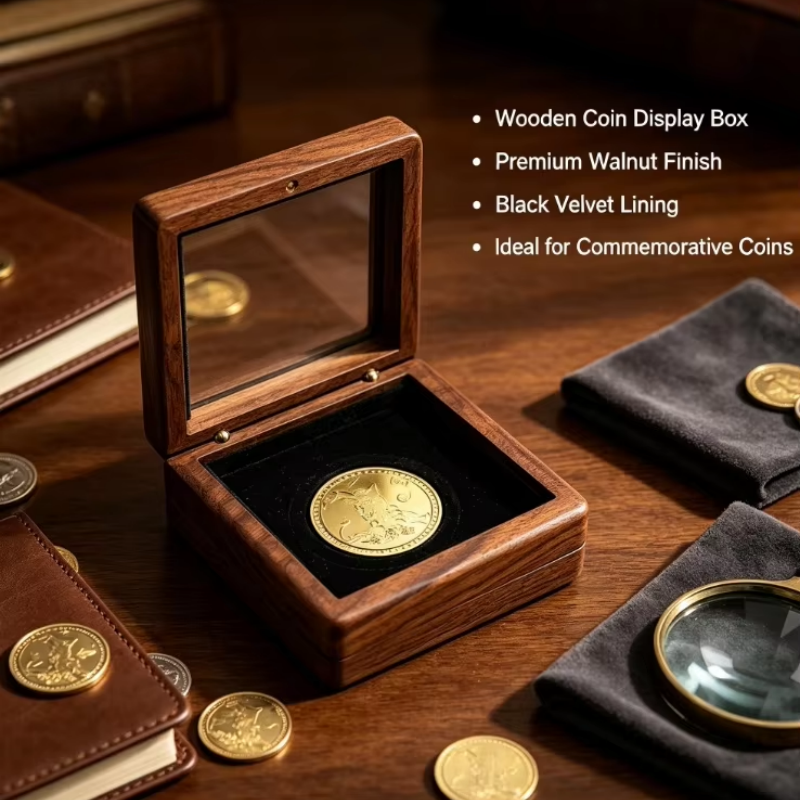
Other useful woods for specific storage-box needs
Walnut for premium presentation
Walnut gives a wooden storage box a dark, sophisticated appearance that works well for executive gifts, keepsakes, and high-value presentation packaging. It is usually selected for visual value rather than the lowest material cost. A transparent finish preserves its character, while an opaque paint would hide much of the reason to specify walnut.
Birch for paint, veneers, and consistent production
Birch is a practical option for a wooden organizer with painted surfaces or a clean, understated finish. Birch plywood can also be useful where flat panels and repeatable dimensions are more important than solid-wood grain. If a buyer specifies a veneered panel box, inspect edge treatment, veneer matching, and the substrate quality. “Wooden” may not mean solid lumber, and that distinction should be clear in product specifications.
Pine and poplar for lightweight, value-led boxes
Pine and poplar can make an economical wooden storage box for low-load indoor use, craft projects, or painted collections. Both are easier to dent than many hardwoods, so they are less suitable for a heavily handled box with an unprotected clear finish. Pine’s knots and color shifts can be attractive in a rustic program; poplar’s relatively uniform surface often makes it a better candidate for paint. Neither is a shortcut around good drying, sanding, and finishing practices.
Solid wood, plywood, or veneer: choose the construction honestly
A solid wood box offers authentic grain and a satisfying tactile feel, but solid panels move across the grain as conditions change. Thin panels, floating-panel construction, and well-designed joints help manage that movement. Plywood is often the more stable choice for broad, flat sides or bottoms in a wooden storage box, particularly when dimensional consistency is essential. Veneer over a stable panel can provide a premium wood appearance with efficient material use. The most suitable storage box materials choice depends on the product promise, not on a blanket claim that one construction is superior.
A buyer’s checklist before approving a wooden storage box
- Match species to use: Choose maple, oak, or acacia for more demanding everyday handling; use walnut where presentation value leads; consider pine or poplar for painted, lighter-duty programs.
- Review moisture and fit: Open and close the lid after conditioning samples; check corners, panel gaps, and base flatness.
- Inspect the finish on every surface: Look inside the wooden storage box, under the base, along the lid edge, and around hardware—not only on the display face.
- Set variation expectations: For natural wood, approve a color and grain range. For repeatable merchandising, define what is acceptable before mass production.
- Check function, not only appearance: Test stacking, weight, lining adhesion, hinges, handles, and odor suitability for the intended contents.
The practical recommendation
For a versatile, durable wooden storage box, oak, maple, and acacia are usually the strongest starting shortlist. Choose oak for visible traditional grain, maple for a smooth refined surface, and acacia for distinctive natural contrast. Select walnut when the box is primarily a premium presentation piece; select birch plywood, pine, or poplar when paintability, panel stability, or value is the priority.
No one wood species fits every wooden storage box. A sound decision comes from aligning species, construction, finish, and quality checks with the actual job the box must do. Caoxian Kangyi Wood Products Co., Ltd. works across wood storage racks, wooden kitchenware, and wooden furniture, so its broader woodworking capability can support buyers who need to compare formats and material directions before finalizing a program.