AR

Wooden Bowl vs Ceramic Bowl: Which Is Better for Everyday Use?
A wooden bowl and a ceramic bowl can both earn a permanent place on the table, but they solve different everyday problems. As a home-cook-minded materials reviewer, I would not call either one universally better. The practical question is what you will serve, how often you will wash it, and how much care you can realistically give it.
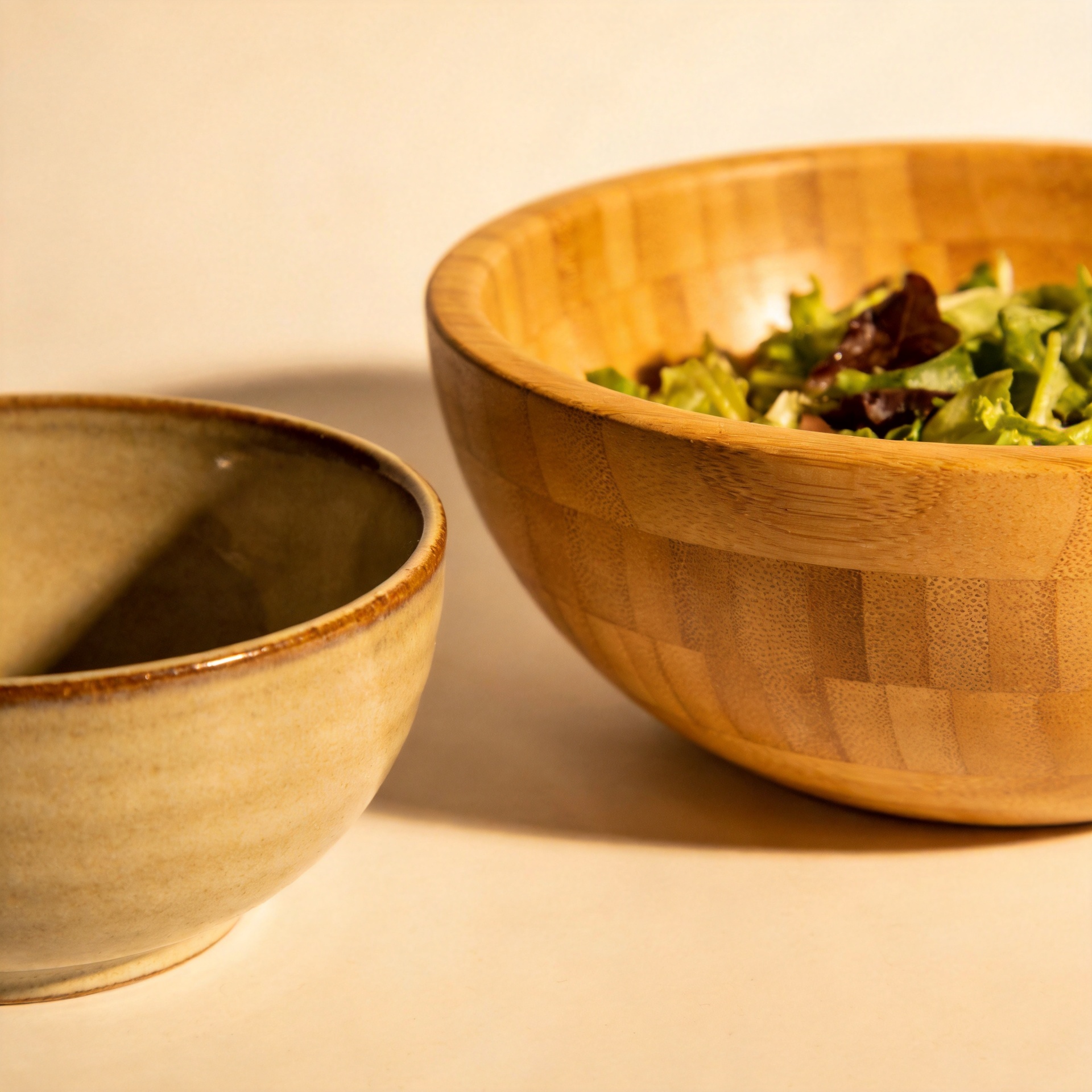
For salads, bread, fruit, snacks, and room-temperature sharing dishes, a wooden bowl brings warmth, low clatter, and a forgiving feel. For soup, cereal, saucy meals, leftovers, and dishwasher-heavy routines, ceramic is often the easier default. This bowl comparison focuses on the trade-offs so you can choose household tableware for the way your kitchen actually runs.
The quick answer: choose by the job, not the look
Choose a wooden bowl if you want a lightweight serving bowl for dry or cool foods and you are happy to hand-wash and dry it promptly. Choose ceramic if you need a bowl that handles wet foods, hot foods, repeated dishwasher cycles, and more intensive cleaning with less maintenance. A well-made wooden bowl can be used every day; it is just not a no-care material.
| Everyday factor | Wooden bowl | Ceramic bowl |
|---|---|---|
| Best uses | Salads, bread, fruit, snacks, cool side dishes | Soup, cereal, pasta, saucy meals, leftovers |
| Feel in use | Light, quiet, warm to hold | Stable, smooth, often heavier |
| Cleaning routine | Hand-wash, dry quickly, occasional conditioning | Usually simpler; check dishwasher guidance |
| Heat and moisture | Better kept away from long soaking and very hot food | Usually more comfortable with wet and hot meals |
| Main downside | Can dry out, stain, crack, or hold odors if neglected | Can chip, crack from impact or thermal shock, and feels heavier |
Where a wooden bowl works well
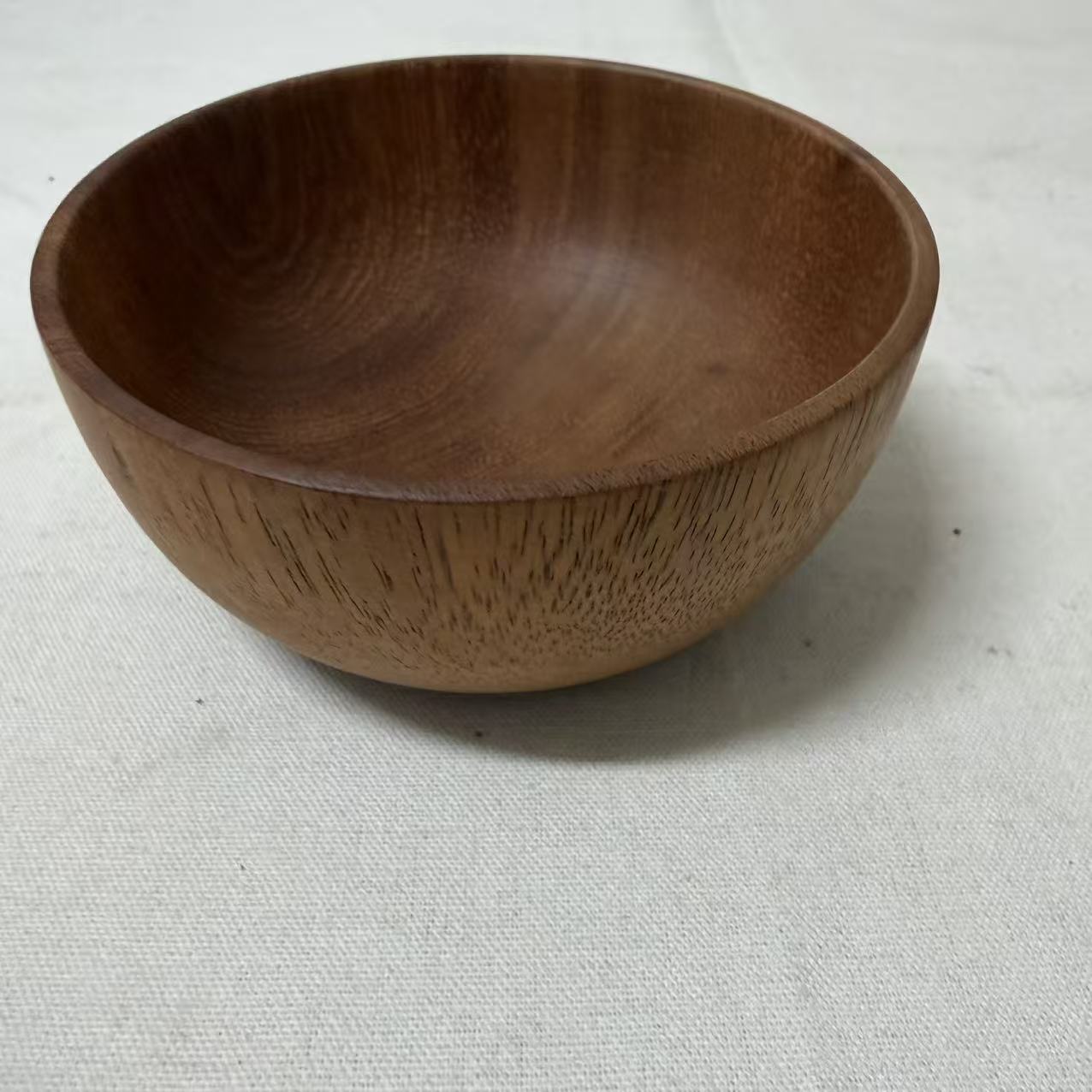
A wooden bowl is especially good as a serving bowl. Its surface is quieter than ceramic when tossed salad tools or serving spoons hit the side, and it does not feel cold in the hand. Acacia and other dense hardwoods are popular for this reason. Still, “natural” does not automatically mean carefree. Species, finish quality, grain orientation, and how the bowl is dried after washing all affect its useful life.
Use a wooden bowl for leafy salads, rolls, whole fruit, nuts, popcorn, crackers, or a cool grain salad. It also makes a comfortable shared bowl for the table because the material is lighter to pass around. For retailers and sourcing teams, this is why wooden kitchenware often performs well in entertaining and gift assortments: it makes ordinary food look considered without needing a complicated presentation.
There is a useful boundary here. A wooden bowl is a less convenient choice for prolonged contact with broth, acidic sauces, or food you expect to store overnight. It may tolerate occasional wet food when finished and cared for properly, but regular soaking is a different conversation. If you want one bowl for ramen, oatmeal, and the dishwasher, ceramic is the calmer choice.
Where ceramic wins for daily convenience
Ceramic bowls are generally the practical workhorses of household tableware. Their nonporous glazed surface is easy to wipe and is usually better suited to soup, cereal, yogurt, pasta sauce, and leftovers. They also work naturally with hot food, provided the maker’s care guidance is followed and the bowl is not subjected to abrupt temperature changes.
Ceramic has its own limits. It can chip at the rim, crack after a hard knock, and break entirely when dropped. A bowl that looks thick is not automatically tougher, either; firing quality, glaze coverage, shape, and the foot ring all matter. For food use, choose pieces expressly intended for food contact. That is particularly important with older, handmade, imported, or decorative pottery, where foodware guidance may differ from what the appearance suggests.
Cleaning and care: the deciding factor for most kitchens
Cleanup is where the difference between the two materials becomes most obvious. For a wooden bowl, wash soon after use with warm, soapy water, rinse it, and dry it rather than leaving it submerged. USDA guidance for wooden cutting boards likewise emphasizes washing after use and drying; while a board is not a bowl, the care principle is relevant. Do not put a wooden bowl in a dishwasher unless its maker specifically says it is safe. Heat, long water exposure, and harsh cycles can pull moisture unevenly from the wood.
When a wooden bowl starts to look dull or dry, apply a food-safe conditioner according to the finish maker’s instructions. This is not fussy maintenance for its own sake; it helps preserve the surface. Oiled finish is not low maintenance, but it can be manageable if the bowl is used for the right foods and cleaned promptly.
Ceramic usually asks less. Many contemporary glazed bowls are dishwasher-safe, but read the marking or product information first. Avoid moving a cold bowl directly into high heat or pouring very hot liquid into a chilled piece. For either material, discard or retire a bowl with damage that creates a hard-to-clean food-contact surface.
Durability is not the same as surviving a drop
People often say wood is more durable because it will not shatter on the floor. That is true in one narrow sense. A wooden bowl may survive a bump that would chip ceramic, and it is less likely to damage a tabletop if it slips. But wood can warp, split, stain, or develop roughness when repeatedly soaked or dried near high heat. Ceramic resists those moisture-related changes better, while remaining vulnerable to impact.
So judge durability by your actual failure mode. Busy households with frequent wet meals may get more long-term value from ceramic. Homes that serve salads, snacks, and breads often may get years of enjoyable use from a wooden bowl with modest care. A sensible choice is the bowl whose maintenance pattern you will actually follow.
A kitchenware guide to buying a better wooden bowl
- Check the intended use: Look for a serving bowl identified for food contact, not a decorative vessel with unclear guidance.
- Inspect the finish: The surface should feel smooth and even, without sticky patches, sharp grain lift, or visible cracks.
- Consider the wood species and construction: Dense hardwoods are commonly chosen for kitchenware, but quality varies with the material and finish.
- Choose a useful shape: A broad, stable base and a comfortable rim matter more for everyday use than a dramatic profile.
- Plan the care: If hand-washing and occasional conditioning will be ignored, buy ceramic for the daily meal bowl and reserve wood for serving.
Final verdict: use both, with clear roles
For everyday eating, ceramic is usually the more convenient all-purpose bowl. For everyday serving, a wooden bowl is often the more inviting choice. There is no need to force one material to do every job: keep ceramic for hot, wet, and dishwasher-oriented meals, then use a wooden bowl for salads, bread, fruit, and relaxed table service.
That division gives you the strengths of both materials. It also makes a bowl comparison less about declaring a winner and more about building a kitchen that works. If your routine includes frequent entertaining or produce displays, add a carefully finished wooden bowl. If it revolves around quick breakfasts and weeknight cleanup, let ceramic handle the daily load.