AR

Wooden Serving Tray Care Guide for Daily Use.
A wooden serving tray earns its place by being useful: it carries coffee, keeps snacks together, and gives a table a warmer finish. That everyday usefulness is also why care matters. A few small habits protect the surface, reduce staining, and help a wooden serving tray look intentional rather than tired after a season of use.
From a materials-inspection perspective, the finish is only part of the story. Grain, joints, edges, and how long moisture remains on the surface all influence long-term performance. The good news is that tray maintenance does not need a complicated routine. It needs prompt cleaning, complete drying, and an occasional check for a thirsty-looking surface.
Start with the right expectation for a wooden serving tray
Wood is a natural material, not a waterproof plastic shell. A wooden serving tray can handle normal serving, but it should not be treated like a soaking pan or left beneath a wet plant pot. Changes in humidity, repeated standing water, and harsh cleaning products can dull a finish or encourage movement at the edges.
Before you commit to a particular routine, ask yourself: does the tray carry dry drinks and packaged snacks, or does it regularly touch cut fruit, sauces, and damp glassware? That use pattern determines how often you clean it and whether a food-safe conditioning product is worth keeping nearby. This is practical wood care, not a reason to over-treat the tray after every use.
If the tray is made from acacia, its naturally higher oil content may make it a sensible choice for a kitchen setting. Still, acacia is not an excuse for neglect. A wooden serving tray of any species benefits from the same basic protection against long exposure to moisture and heat.
The daily tray maintenance routine
For ordinary crumbs, a dry or barely damp soft cloth is enough. After a meal or spill, clean the wooden serving tray as soon as practical instead of waiting until residue dries. Use a soft sponge or cloth with mild dish soap and warm water, then rinse the cloth and wipe away soap residue. Do not submerge the tray and do not leave it in a sink.
USDA food-safety guidance for wooden cutting boards recommends washing with hot, soapy water after use, rinsing with clear water, then air-drying or pat-drying with clean paper towels. A tray is not the same product as a cutting board, but the principle is helpful when a wooden serving tray directly contacts ready-to-eat food: clean promptly, rinse away cleaner, and dry fully. Follow the tray maker’s care instructions when they differ.
- Remove crumbs and spills. Wipe the wooden serving tray before sticky drinks or food residue set.
- Wash gently. Use mild soap, warm water, and a soft cloth rather than an abrasive pad.
- Rinse the cloth and wipe again. This helps keep detergent from drying as a film on the surface.
- Dry both sides and the edges. Stand the wooden serving tray on edge or on a rack until all surfaces are dry.
- Return it to a ventilated cupboard or display area. Avoid trapping a damp tray against another flat surface.
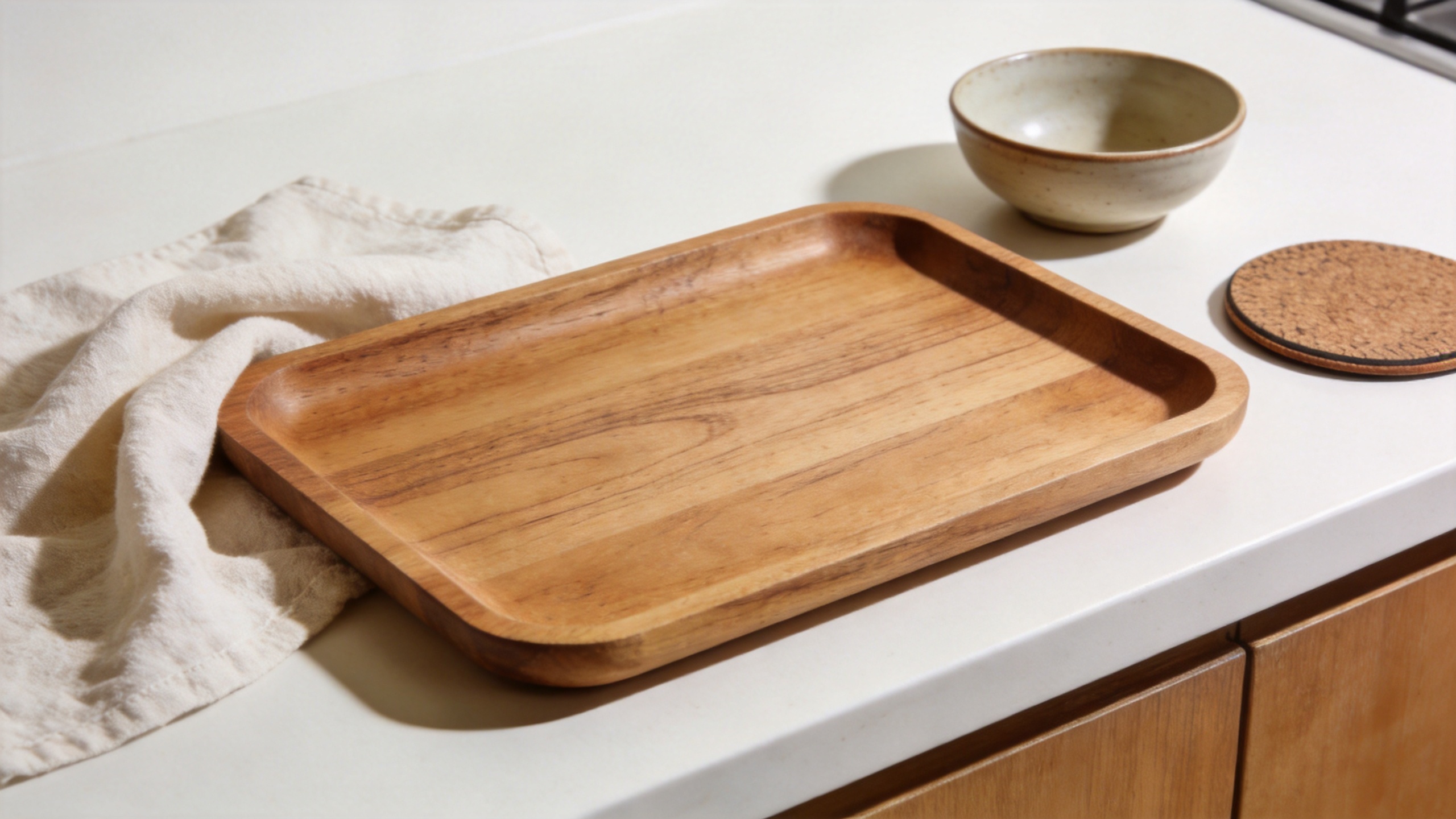
What not to do with a wooden serving tray
The fastest way to create unnecessary repair work is prolonged water exposure. Avoid putting a wooden serving tray in a dishwasher unless its maker explicitly says it is dishwasher-safe. High heat, detergent, and a long wet cycle are a poor match for most wood finishes and glued joints. Similarly, do not soak it, store it while wet, or leave an ice bucket sweating on it without a protective liner.
Abrasive scouring powders, steel wool, and strongly scented cleaners can scratch or leave residue. Avoid using the tray as a chopping board; knife cuts open fresh pathways for moisture and staining. Direct oven heat, a hot pan straight from the stove, and prolonged full sun can also stress the surface. Anyway, the point is simple: a wooden serving tray is durable when used as serving accessories, not as an all-purpose work surface.
How to deal with rings, stickiness, and food contact
For a fresh water ring, wipe the wooden serving tray dry and allow it to rest in a stable indoor environment before doing anything more aggressive. Many light marks become less noticeable once residual moisture evaporates. For sticky residue, use a soft cloth with mild soapy water, then dry the tray right away. Do not chase a mark with repeated saturation.
When the wooden serving tray has touched raw-food juices, use a more deliberate cleaning approach and follow local commercial food-service requirements where relevant. USDA guidance says wooden cutting boards can be sanitized using a solution of one tablespoon of unscented liquid chlorine bleach per gallon of water, followed by a clear-water rinse and drying. Treat that as occasional food-safety guidance by analogy, not as a universal finish recommendation: first check the finish manufacturer’s instructions. In many homes, keeping raw-protein preparation off a wooden serving tray is the simpler choice.
When a wooden serving tray needs conditioning
Conditioning is not a calendar chore. Look instead for observable changes: the wood appears dry or chalky, the surface feels rough after cleaning, or water seems to disappear into the grain quickly. When those signs appear, apply a small amount of a food-safe wood conditioner or board oil that is appropriate for the tray’s finish. Follow the product label, work with a lint-free cloth, and remove excess rather than leaving the surface greasy.
Test first on an inconspicuous area if the wooden serving tray has a stained, painted, lacquered, or unknown finish. Oils that suit bare or oil-finished wood may not be appropriate for every coated surface. Honestly, the grain pattern may photograph beautifully, but the most useful indicator is how the tray feels after it has been cleaned and dried. Smooth, even, and non-tacky is the goal.
Care guidance for retailers and kitchen products teams
For supermarkets and trading companies, care communication can reduce avoidable returns and help customers enjoy wooden kitchen products longer. Include a short care card or online product note that tells buyers to hand-wash, dry promptly, avoid soaking and dishwashers, and condition only when the surface appears dry. That is more helpful than a vague “wipe clean” line.
It also helps to separate material claims from broad promises. A solid wood tray may feel substantial, and an acacia tray may offer useful moisture resistance, but neither point means a wooden serving tray is maintenance-free. Clear tray maintenance instructions set the right expectation while preserving the appeal of natural wood.
A simple weekly check
Once a week, hold the wooden serving tray under good light. Look at the corners, handles, underside, and any seams. Check for tackiness, persistent odor, lifting finish, cracks, or a wobble. Wipe dust from the underside as well as the top. This small inspection makes wood care easier because issues are addressed while they are minor.
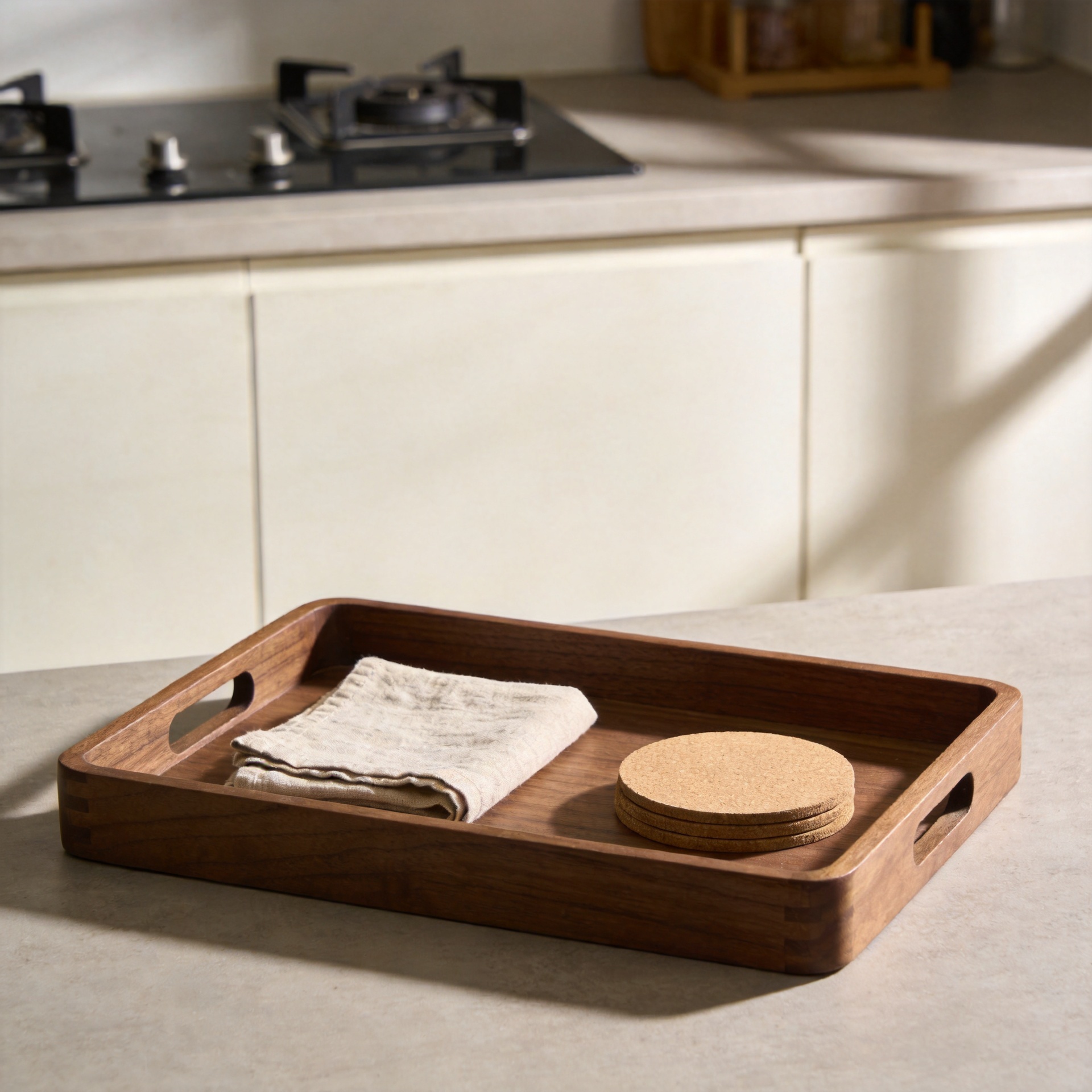
For daily service, keep coasters, napkins, or a washable liner nearby for cold drinks and saucy dishes. These serving accessories reduce contact with condensation without hiding the tray’s natural character. With that routine, a wooden serving tray remains ready for breakfast, coffee, snacks, and casual entertaining instead of becoming an item reserved for special occasions.
Final takeaway
A reliable care plan is uncomplicated: clean a wooden serving tray promptly, keep it out of standing water, dry every side, and condition it only when the finish calls for it. Respecting those limits protects both the look and the working life of a wooden serving tray. For anyone choosing kitchen products for regular use or retail sale, practical care information is part of the product experience, not an afterthought.