AR

What Is a Wooden Spatula Used for in Everyday Cooking?
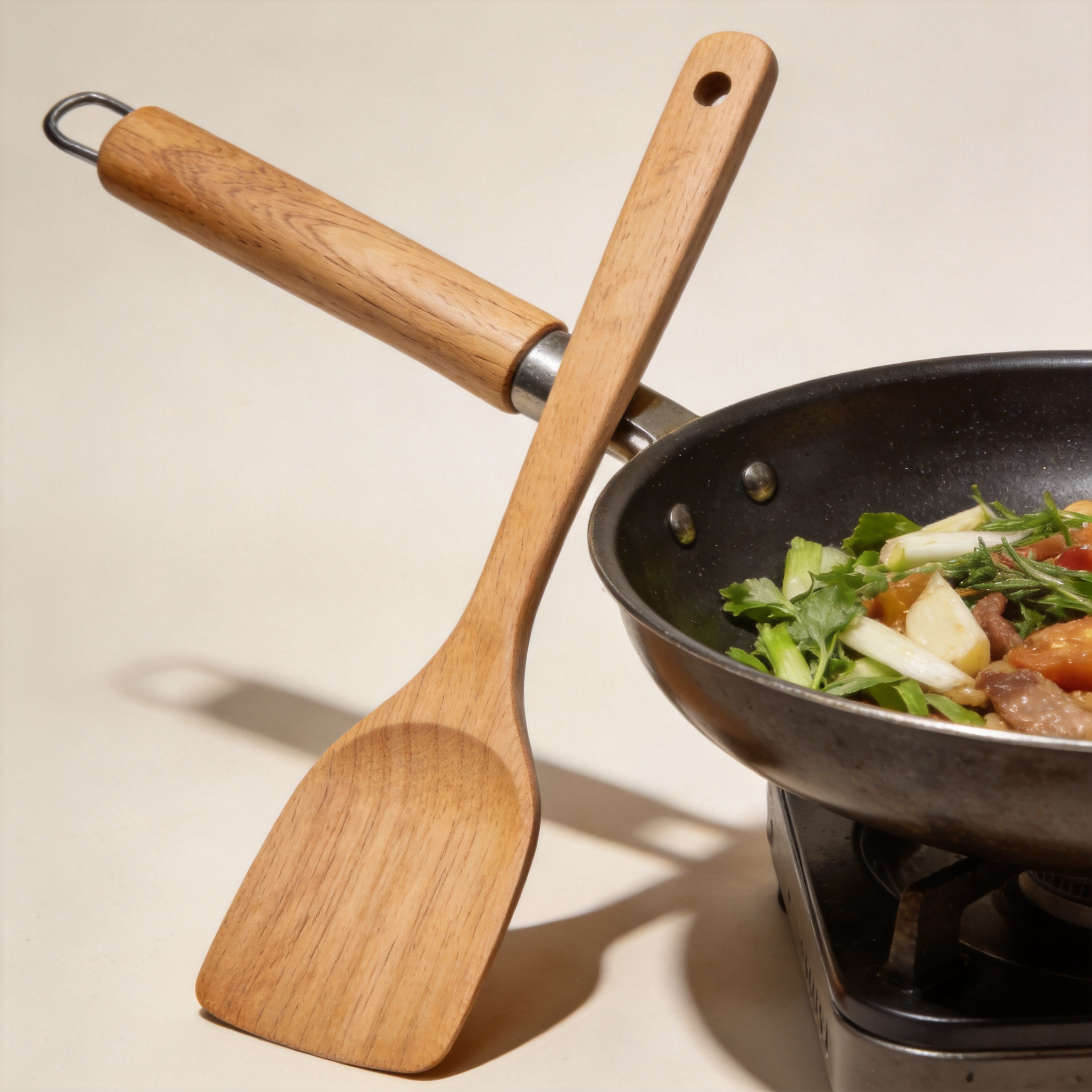
A wooden spatula is one of those quiet kitchen tools that earns its place by doing several small jobs well. It can stir onions, loosen browned bits, fold vegetables through a sauce, turn a pancake, and move eggs around a pan without the hard edge of metal. For most home cooks, the appeal of a wooden spatula is not that it replaces every utensil. It is that it feels predictable in daily cooking: comfortable in the hand, gentle on many pan surfaces, and useful from the first sauté to the final scrape.
It helps to treat a wooden spatula as a broad category rather than one exact shape. A thin, flat turner behaves differently from a rounded spoon-spatula or a slotted paddle. Choosing the right version starts with the cooking task, not with how attractive the grain looks on the utensil crock.
The everyday jobs a wooden spatula handles
In a skillet, a wooden spatula is especially useful for stirring foods that need frequent movement. It can guide diced onions around the pan, keep garlic from sitting in one hot spot, and fold greens into a warm dressing. Its edge is usually firm enough to sweep across a pan bottom while remaining less aggressive than a metal blade.
For soft foods, use a wooden spatula to scramble eggs, stir risotto, mix a one-pan pasta sauce, or break up gentle clumps in ground meat. A flat cooking spatula can also lift cookies or slide under a fried egg when the head is thin enough. That distinction matters: a thick, blunt paddle stirs well but may not suit a delicate flip.
- Stirring and sautéing: moving vegetables, grains, sauces, and aromatics around a pan.
- Scraping and deglazing: loosening fond with a little liquid while keeping control of the pan bottom.
- Folding and serving: combining ingredients gently or transferring cooked food to a bowl.
- Turning: using a thin-edged frying spatula for pancakes, fish, fritters, or toasted sandwiches.
A wooden spatula is therefore strongest at everyday motion: push, sweep, fold, and scrape. It is less suited to cutting, prying baked-on food free, or handling a very heavy item that needs a rigid fish turner.
Why it works well with common cookware
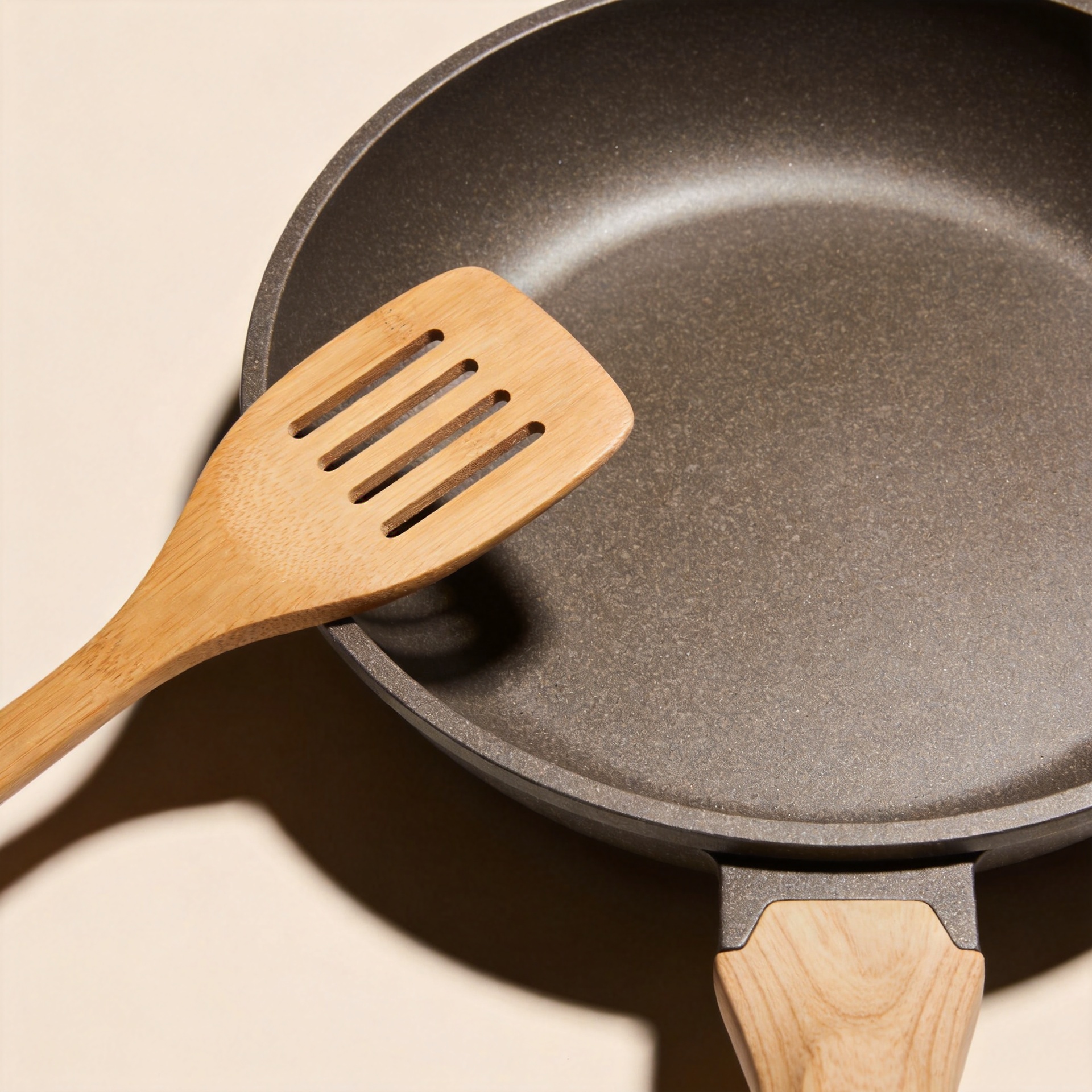
Many people reach for a wooden spatula with nonstick, ceramic-coated, and enamel cookware because a smooth wood edge is less likely to scratch the cooking surface during ordinary use. That does not mean every wood tool is automatically safe in every situation. Rough edges, cracks, or a poorly sanded corner can still be unkind to a pan, and no utensil should be used as a scraper with excessive force.
Wood also stays more comfortable to hold near a warm pan than bare metal. It does not conduct heat as quickly, though the handle can still get hot if it rests against the rim or remains in food for too long. For high-heat searing, use the wooden spatula to stir and manage ingredients, then choose a stronger turner if the food needs a sharp, thin lift.
There is no single universally suitable wooden kitchen utensil for every recipe. A narrow rounded head suits sauces and small pans; a wide flat head is better when you need surface contact. Before buying, ask yourself: do you mostly stir, scrape, or flip? That answer makes shape more important than decoration.
How to choose the useful shape
Flat or angled head
A flat wooden spatula is the practical choice for sauté pans, sheet-pan transfers, and foods that need a broad sweep. An angled front edge reaches the curve where pan bottom meets sidewall. If flipping is part of the plan, look for a thin, tapered leading edge rather than a thick block-like head.
Slotted or solid head
A slotted wooden spatula lets oil or cooking liquid drain as you lift food, which is useful for vegetables, fried items, and poached foods. A solid head gives better control for sauces, rice, and softer mixtures. Neither is universally better; the right one depends on whether you want to carry liquid or leave it behind.
Handle and finish
Hold a wooden spatula before choosing one, if possible. The handle should feel balanced, with no sharp transitions near the neck. A smoothly sanded, intact finish is easier to clean than a rough surface. “Food-safe utensil” is a useful buyer requirement, but it should lead to a specific question: what finish is used, and is it intended for food contact under the rules that apply where you will sell or use it? Wood alone is not a certification.
Care that keeps a wooden spatula pleasant to use
A wooden spatula needs simple, regular care rather than complicated treatment. Wash it promptly with warm or hot soapy water after use, rinse it, and dry it thoroughly. USDA consumer guidance similarly advises washing utensils with hot, soapy water after each use. Avoid leaving a wooden spatula soaking in a sink or running it repeatedly through a dishwasher; prolonged water exposure and heat can encourage swelling, drying, or splitting.
If the wood starts to look dry, a small amount of a food-contact-appropriate conditioning oil can help restore the surface, following the product instructions. This is not a shortcut for cleaning. Oil should be applied to a clean, fully dry utensil, and any product used on a wooden spatula should be suitable for that purpose.
After the first few washes, inspect the utensil closely. A smooth surface may become slightly raised as wood fibers respond to water. Light roughness can sometimes be smoothed according to the maker’s care guidance, but deep cracks, splinters, sticky residue that will not wash away, or a persistent odor are reasons to replace the wooden spatula. A cracked tool is harder to clean consistently and less pleasant to use.
When a wooden spatula is the right tool—and when it is not
Use a wooden spatula for routine stovetop cooking, gentle pan scraping, stirring, folding, and serving. Keep a flexible silicone tool for bowl scraping, a thin metal turner for tasks that genuinely need rigidity, and tongs for gripping. Building a small mix of tools makes more sense than asking one utensil to solve every kitchen problem.
For households and buyers selecting wooden kitchenware, the practical test is straightforward: does the wooden spatula match the pan, the recipe, and the person using it? Caoxian Kangyi Wood Products Co., Ltd. works across wooden kitchenware alongside other wooden home goods, a breadth that makes task-specific shape and finish discussions more useful than vague “premium” claims. A well-made wooden tool does not need to be complicated. It should feel smooth, clean easily, and make ordinary cooking a little easier.
Quick answers
Can a wooden spatula be used on nonstick cookware?
Yes, a smooth wooden spatula is commonly used for ordinary stirring and turning in nonstick cookware. Avoid rough, cracked, or splintered tools and do not scrape forcefully.
Is a wooden spatula good for frying?
A thin-edged frying spatula made of wood can help turn lighter foods. For a delicate fillet or a heavy burger, a purpose-built thin turner may offer better support.
How often should I replace a wooden spatula?
Replace a wooden spatula when it develops deep cracks, splinters, stubborn odor, or damage that prevents reliable cleaning. With routine hand washing and thorough drying, many remain useful for a long time.